Mills College (Oakland, CA) Graduate Assistantship in Community Poetics – a new two-year, full-tuition assistantship to one student pursuing an MFA degree in poetry beginning Fall 2011. Deadline for application is December 15.

NewPages Blog
At the NewPages Blog readers and writers can catch up with their favorite literary and alternative magazines, independent and university presses, creative writing programs, and writing and literary events. Find new books, new issue announcements, contest winners, and so much more!
On Teaching and Pain
“What teacher has not felt this pain—the pain of the audible yawn from the kid in the back row just as you launch into the lesson you worked on for an hour and a half—or worse, the lesson you spent only ten minutes preparing and are now feeling vulnerable about? This is not acute pain, not the pain of discovering that a student has craftily plagiarized an essay for your class, or reading a mean-spirited comment on a course evaluation, or being insulted to your face. This is the low-grade fever, the chronic hypertension of teaching, the apathy, dismissiveness, and dehumanization I suspect are part of most teachers’ everyday lives.”
From Strange Flowers and Gubbinals: On Teaching and Pain by Frank Kovarik
Read the rest – it does offer hope.
C4’s Best of the Web Fiction Anthology
 Chamber Four Fiction Anthology: Outstanding Stories from the Web 2009/2010 is available for free download (PDF and mulit-eReader formats) and includes 25 stories chosen by C4 editors for their “availability online and that hard-to-define but unmistakable hallmark of quality.” Full table of contents and author bios, as well as bonus content (interviews with Angie Lee, Roy Giles, Andy Henion, Scott Cheshire, and “Publishers Lie and Other Things We Learned From Publishing ‘The Chamber Four Fiction Anthology’”) is available on C4’s Anthology page.
Authors whose works were chosen for the C4 Anthology: Andrea Uptmor, Angie Lee, Scott Cheshire, Alanna Peterson, Eric Freeze, Steve Almond, Sarah Salway, Svetlana Lavochkina, Valerie O’Riordan, L.E. Miller, B.J. Hollars, C. Dale Young, Andy Henion, Aaron Block, Steve Frederick, Trevor J. Houser, Roy Giles, Emily Ruskovich, David Peak, Castle Freeman, Jr., Ron MacLean, Corey Campbell, Taryn Bowey, Michael Mejia, William Pierce.
Passings :: JP Farrell
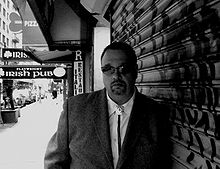 Publisher of Atonal Poetry Review, John Patrick (JP) Farrell had been hospitalized since October 19 and passed away Wednesday, November 3, 2010. Messages for the family can be left on the Vaughan Funeral Home website.
Arkansas Review – August 2010
Formerly the Kansas Quarterly, this issue of the Arkansas Review features two essays, a memoir, a poem, one short story, and numerous reviews. I like the narrow double column format (found most commonly these days in newspapers and The New Yorker), which makes the analytical essays (“Ain’t No Burnin’ Hell: Southern Religion and the Devil’s Music” by Adam Gussow and “Farmers and Fastballs: The Culture of Baseball in Depression Era Northeast Arkansas” by Paul Edwards) highly readable. These essays are intelligent and informative, but not stuffy or opaque. Continue reading “Arkansas Review – August 2010”
Borderlands – Spring/Summer 2010
The “borderlands” concept has never been more accurate. Along with a more general selection of more than 20 poets, this issue features a special section of “translingual poets,” defined as writers who “create in a language other than the one they were born into.” Editor Liliana Valenzuela praises the fine work of the translators whose work appears here alongside the originals and notes that many are gifted poets themselves. This issue also includes wonderful artwork by Liliana Wilson, terrific images with surreal elements, but wholly “real” human aspects that render the work both familiar and wondrous in the magical (but not silly or childish) sense of the word. Continue reading “Borderlands – Spring/Summer 2010”
Cream City Review – Spring 2010
Sarah Legow’s cover art for the latest 245 page volume of Cream City Review depicts ordinary objects inside eggshells. One shell holds sand. Another holds fur. Others hold clock gears, cigarette butts, shells, and twine. It’s oddly perfect for the issue, as Cream City is crammed with strange, good pieces that give magic-realistic tinges to ordinary and gritty subjects. Continue reading “Cream City Review – Spring 2010”
Descant – 2010
In “The Last Jesus I Know Of – ” a nonfiction piece from Descant’s “Writers in Prison” issue – Stephen Reid writes “amongst living books, the shape of your world can shift a thousand times, one for each title, or be changed forever in a single page. In its own way, the prison library is more dangerous than the big yard.” Continue reading “Descant – 2010”
Forklift, Ohio – Fall 2009
It sounds huge – Forklift. It’s subtitled as if the description was written after a night of heavy drinking – A Journal of Poetry, Cooking & Light Industrial Safety. It’s quirky – for example, section titles from the TOC: A Precaution in Planting; Fresh from the Nursery; Animals in the Garden; Sprinkling vs. Watering; and so forth. It looks fun, with whacky illustrations and graphics. It feels small – Forklift fits in one palm. It’s all of these things. And none of them. And you should take it seriously, even if it does its level best to dissuade you from doing so, at least at first glance. Continue reading “Forklift, Ohio – Fall 2009”
Front Porch – Summer 2010
This journal is run by the MFA students at Texas State University and was founded in 2006. Each edition produces some combination of fiction, nonfiction, book reviews, interviews, poetry, and audio/videos. Continue reading “Front Porch – Summer 2010”
Main Street Rag – Summer 2010
This issue is consistent with Main Street’s approach both to the mag and its chapbook series, direct, approachable poems and stories composed of casual diction, conversational tones, and familiar imagery. This issue features an interview with Main Street chapbook author Richard Allen Tyler, along with the work of 28 poets and a half-dozen fiction writers. The work of four photographers rounds out the issue. I liked, in particular, “A Pike’s Peak Spring” from M. Scott Douglass, clouds and snow gathered on and around railroad tracks captured at a moment of altering textures, depicted expertly in the photograph. Continue reading “Main Street Rag – Summer 2010”
Nimrod International Journal – Fall/Winter 2010
Nimrod’s eagerly anticipated annual awards issue features prize winners, finalists, semi-finalists, and honorable mentions in the Pablo Neruda Prize for Poetry and Katherine Anne Porter Prize for Fiction: Terry Blackhawk, Shannon Robinson, Harry Bauld, Lydia Kann, Dan Kelty, Deborah DeNicola, Morris Collins, Sue Pace, Jude Nutter, Francine Marie Tolf, Ed Frankel, William Pitt Root, Laura LeCorgne, Andrea L. Watson, Usha Akella, Mark Wagenaar, Kate Fetherston, and Pamela Davis. Their work is accompanied by poems and stories by several dozen other poets and prose writers, including the amazingly prolific poet Linda Pastan, widely published poet Richard Terrill, and several fine translations of poetry originally published in Turkish and German. Continue reading “Nimrod International Journal – Fall/Winter 2010”
Phoebe – Fall 2010
When I received phoebe, I was struck by the name. Phoebe was one of the Titan gods and for some time was in control of the Delphic Oracle. She’s been called Goddess of Wise Counsel, Thoughtful Replies, and Snappy Answers. What a great name for a journal! I though with glee. I began reading with an earnest hopefulness that phoebe would turn out to be wise, intelligent, and quirky. Was she ever! Continue reading “Phoebe – Fall 2010”
Santa Monica Review – Fall 2010
This issue of the Santa Monica Review features eleven stories introduced by a brief excerpt from each of the contributors (“Ab Intra”). The journal’s website describes its contents as fiction and nonfiction, though there is no genre classification in the TOC or the pages of the magazine. I’m tempted to refer to every entry simply as a “story” (real or imagined), though some pieces clearly do read more like fictive creations and others like “lived tales,” beginning with the opening piece in the issue, “Expert Opinion,” by Michelle Latiolais, a story about suicide, medical malpractice, and the fatal consequences of “adverse” reactions to commonly prescribed drugs. Continue reading “Santa Monica Review – Fall 2010”
The Sow’s Ear Poetry Review – Number 20
The magazine’s contest winner Dean Rader is joined by two dozen poets and a marvelous “Crossover” feature, “Book Sculptures” by Samantha Y. Huang, photo reproductions of exactly what the title of her work denotes, pages, spines, covers, words/text the stuff of three dimensional “ideas.” Poems in this issue, like Huang’s book sculptures, aim to reshape the way we think about spaces, places, and the capacity of language to capture unique angles. Continue reading “The Sow’s Ear Poetry Review – Number 20”
Sycamore Review – Summer/Fall 2010
Amber Albrecht’s intricately composed, enticing drawings, more than two-dozen of which appear in the magazine as well as on the front and back covers, are representative of the work in this issue. You want to look more closely, find out more, figure out why a tree is sprouting from the back of a dress or from the chimney of a house. These images and perspectives are hard to classify. They’re not whimsical or playful so much as intensely of-the-moment, heightened in a familiar, but somewhat mysterious manner. They seduce with a kind of welcoming strangeness, a dress that looks like an egg from which the figure is hatched, a patch of ground that resembles a flying carpet, and titles like “People Who Are Not Like Us,” a short story by Brock Clarke. The opening of the story, too, captures the spirit of magazine as a whole: “Rupert goes first. Rupert’s real name is Shamequa, but we call her Rupert because one of the things we do is give black women the names of white men.” An irresistibly original beginning. Continue reading “Sycamore Review – Summer/Fall 2010”
Hint Fiction on NPR
‘Hint Fiction‘ is the latest in literary downsizing: 25 words or fewer that hint at a story. Read/listen to the ‘long’ story of Robert Swartwood call for submissions the the anthology the that resulted – along with several examples (full-text, of course).
Essay: Reine Dugas Bouton “My Inner Latina”
“I’m a mix, a Mediterranean cocktail of sorts, like many people in New Orleans. My dad’s French and Italian; my mom’s Spanish with a touch of Welsh. The closest link I have to my ethnicity is my cousin in Los Angeles. Lisa is proud of her Latina heritage — she lives it. She spends time with her boisterous, voluble, in-your-face, never boring family; they dance at parties, make tamales for the holidays, speak in English with Spanish words sprinkled like bits of jalapeño into a salsa verde. Proud of who she is, Lisa’s got a spicy personality and speaks rapid fire.”
Excerpt from “My Inner Latina: Dancing toward a lost heritage” by Reine Dugas Bouto, published online in Etude: New Voices in Literary Nonfiction.
Narrative Literary Puzzler Haiku II
This week, Narrative’s Literary Puzzler invites participants to their second Haiku competition; send in a poem incorporating the theme of the fall season. Deadline: Noon on Sunday.
Contemporary Poetry Review Relaunch
Ernest Hilbert editor of the Contemporary Poetry Review from 2005 until 2010, bids the publication farewell as it “relaunches” into a new era as on online publication.
Censorship in Iran Publishing
“Figures from the Ministry of Culture and Islamic Guidance show that the country has some 7,000 publishing firms. Take just two of these companies – one of them says it has about 70 novels and short story collections currently pending approval from the censors. The other says it has had between 50 and 70 books awaiting review at any one time for the past two years.
“Censors…go through already published works as well as the never-ending flow of new ones, checking line by line to see whether they were compatible with the “core Islamic values” the new administration wanted to assert.
“In practice, though, the censors only look at literature, books on art, and works on literary criticism and theory, which account for about 40 per cent of all books published in Iran.”
Books Stuck in Iran’s Censorship Quagmire
By Omid Nikfarjam; source: Institute for War & Peace Reporting (IWPR)
Los Angeles Review on What Editors Have Read Too Much Of
The Los Angeles Review has posted “Freele Pesters: Installment 3” – notes from the third week of their fiction workshop. This one includes Fiction Editor Stefanie Freele Pesters in conversation with Nancy Boutin, Prose Editor, and Joe Ponepinto, Book Review Editor, answering the question: “What styles or techniques (prose) have you read too much of? not enough of?”
Also included is Heather Freese (Contributor – “The Popular Girls’ Guide To Sticking It To Your Friends” LAR Issue 6) answering the question: “Should a reader have to ‘understand’ a story?” as well as other questions on issues of style and technique (including the use of second person).
Week Two focused on “Narrative Tension and Anticipation in the Short Story” and Week One on “The Importance of Beginnings” – both of which can be found in the Archives.
Franzen Fans
 The newest issue of College Literature (General Issue 37.4 / Fall 2010) includes the essay “Assessing the Promise of Jonathan Franzan’s First Three Novels: A Rejection of ‘Refuge'” by Ty Hawkins (Ph. D., Saint Louis University). Frazen’s works cited in the essay: The Twenty-Seventh City, Strong Motion, The Corrections, “Mr. Difficult” and “A Word About This Book,” both from How to Be Alone: Essays.
Adam Gussow and Blues English
 Adam Gussow: Ole Miss English prof by day, blues man by – well – day also: “I’ve always had a dual interests between the blues and literature,” Gussow said. “I treat blues lyrics like lyric poetry. I try to keep a balance situated between performance and critique.” Gussow’s solo album, Kick and Stomp, has just been released.
The Healing Muse – Content of Common Experience
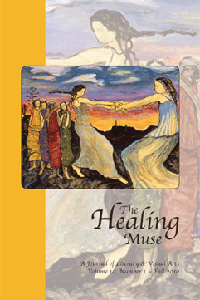 In the Editor’s Note for the Fall 2010 issue of The Healing Muse, Deirdre Neilen writes, “Our lives have their own unique roads to travel, but when the detour called Illness enters, we soon learn we have joined, willingly or unwillingly, a very large community with a language and a culture of its own that demands our attention and commitment…we become adept negotiators of hospital mores and insurance protocols, of treatment modalities and drug therapies; the mildest among us morph into warrior-advocates for our loved ones; we stand shoulder to shoulder with our nurses and physicians, our therapists, and our own research. And we write about the bartering, the begging, the rage; we’re not too proud to pray, to swear, to do whatever it takes to get a cure, an extension, a hope. We suffer – either as the person who is ill or as one who witnesses and cares for that one.
“Yet all this suffering somehow does not destroy us; we endure, and we incorporate it into the life we are trying to save, to maintain, to extend…”
And so begins this issue of The Healing Muse in recognition of its content, and the content of each and every issue. Hard core. Truthful. Honest. And recognizable, ‘relatable’ to so many of us.
New Letters – Fat America Thin Literary Art
 In “Grounded: An Editor’s Note” (full text online) in the newest edition of New Letters (v76, n4), Robert Stewart says, “As America gets fatter, it seems to want its art to become weightless.”
Ouch. But true. Read on.
“Kindle-like products seem fine enough, but marketing has induced many people I know into feeling guilty for continuing to prefer regular books and journals. I believe that physical matter in literary art, as in the universe, cannot be destroyed. One must know how, and sometimes where, to look. My institution’s library just celebrated the installation of a book ‘robot’ — sealed up, like Poe’s Fortunato, in a cave-like room—where the library will seclude a promised 80 percent of its books and print journals, accessible for request but not for browsing. We can browse cataloguing-in data; but books and journals on shelves, in aisles, belong to the physical world, due for a change. The library has its reasons, as a friend points out, trying to fulfill contradictory missions: to provide access and also preserve the materials. Articles and chapters on library reserve for student reading now must be digitized; so none of my own students need get up and actually enter the library. This weightlessness, I admit, weighs on me…”
And there’s more. Read the rest here.
NewPages Literary Magazine Reviews Posted
Check out the latest great post of NewPages Literary Magazine Reviews, including both new and established publications in print:
Annalemma
Chinese Literature Today
Crazyhorse
Fourteen Hills
The Meadow
Minnetonka Review
Natural Bridge
Paterson Literary Review
Salt Hill
Santa Clara Review
Santa Fe Literary Review
The Seattle Review
Yellow Medicine Review
If you are interested in writing literary magazine reviews for NewPages, visit the Reviewer Guidelines.
The AGNI Portfolio of African Fiction
 Coedited by E. C. Osondu and William Pierce, the AGNI Portfolio of African Fiction is a landmark gathering of stories from Djibouti, Nigeria, Uganda, South Africa, the Gambia, and elsewhere. “The AGNI Portfolio of African Fiction creates an unexpected portrait of the African continent—political, sexual, religious, commercial, and literary — by writers such as Abdourahman A. Waberi, Henrietta Rose-Innes, Helon Habila, Doreen Baingana, Chuma Nwokolo, Jr., and Monica Arac de Nyeko.” The portfolio will connect AGNI’s two venues this fall: half of the stories appearing in AGNI 72 (now available for purchase), and half available full text at AGNI Online.
Gulf Coast Prize Winners :: 2010
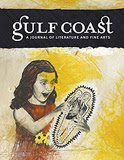 The newest issue of Gulf Coast (v23 i1) includes the 2010 winners of the Gulf Coast Prize:
Judith Kroll, Nonfiction Winner, “Happy Families”
Sara Batkie, Fiction Winner, “Cleavage”
Anne Marie Rooney, Poetry Winner, “Flower sonnet”
Poets on Family Incarnations
Guernica November 2010 includes “Deepening into Humanness” – guest Editor Emily Fragos introduces six poets who write about family incarnations — Matthew Zapruder, Cynthia Cruz, Gabriel Fried, Mark Wunderlich, Lynn Melnick, and Jennifer Franklin.
“The poets I have chosen as Guernica’s November guest poetry editor use ‘family’ in a variety of ways. But they all make the personal universal and the intimate a revelation, and they do this without self-pity or sentimentality. I was drawn by the deepening into humanness in each poem—lucid yet somehow mysterious—yet these poets did not try to be mysterious, which would have come across as pretentious and dishonest.”
Creative Nonfiction Mentoring Program Classes
As part of their Mentoring Program, Creative Nonfiction will be offering two 10-week course taught by Anjali Sachdeva:
Basics in a Nutshell will introduce writers to the basics of creative nonfiction, exploring both the techniques used to gather information and the literary skills needed to turn bare facts into personal and compelling essays.
Writing the Personal Essay takes a close look at the writing and research skills needed to write a memoir or personal essay and refines them over the course of 10 weeks.
A complete outline of course content is available online. Registration is limited to 12 students each.
Narrative Spring 2010 Story Contest Winners
The Narrative Spring 2010 Story Contest Winners‘ stories are now available to read online. Winners and finalists:
FIRST PLACE ($3,250)
Scott Tucker, “I Would Be Happy to Leave This Asylum”
SECOND PLACE ($1,500)
Peter Grimes, “Victoria”
THIRD PLACE ($750)
Megan Mayhew Bergman, “Birds of a Lesser Paradise”
TEN FINALISTS ($100 each)
Elizabeth Benedict
Mary Costello
Marta Evans
Katherine Jaeger
Elias Lindert
Alexander Maksik
Jerry Mathes II
E. V. Slate
Lynn Stegner
Lori Tobias
The Obscure Reference: Sony Walkman in Literature
Who knew Sony’s Walkman would one day become an obscure reference in literature…
Digital Poetry Exhibition
 Jason Nelson has built an exhibition of digital poetry interfaces on heliozoa. Nelson writes, “In the simplest terms Digital Poems are born from the combination of technology and poetry, with writers using all multi-media elements as critical texts. Sounds, images, movement, video, interface/interactivity and words are combined to create new poetic forms and experiences. And when a piece like ‘game, game…’ attracts millions of readers while a ‘successful’ print poem might attract a hundred, I think the digital truly is the future of poetry.”
Poetry :: Brianna Joelene Gionet
The beginning of Reincarnation by Brianna Jolene Gionet”
When my grandfather dies-
and comes back as a lion
I already know what he will smell like:
[Published in The Pacific Review]
Handbook for Writers in Prison
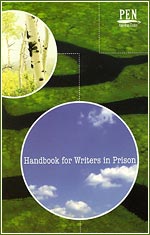 PEN’s Handbook for Writers in Prison features detailed guides on the art of writing fiction, nonfiction, poetry, and screenplays as well as information on punctuation, cover letters, and a list of recommended magazines and journals that consider work for publication. This is an invaluable resource to any incarcerated writer. To date, PEN has distributed 20,000 copies of the Handbook and continues to receive requests.
If you or someone you know is currently incarcerated, you are eligible to order a FREE copy of the Handbook for Writers in Prison. Workshop instructors who would like to use the Handbook for Writers in Prison for classes are encouraged to purchase copies for only $5.
Tupelo Press / Crazyhorse Award Winner
 Winner of the Tupelo Press / Crazyhorse Award The Forest of Sure Things by Megan Snyder-Camp is now available for purchase.
The 12th Annual Tupelo Press Award for a First or Second Book of Poetry is an open competition with a $3,000 prize. Submissions are accepted from anyone writing in the English language, whether living in the United States or abroad (translations are not eligible for this prize). Final judges will be the editors of Tupelo Press and the journal Crazyhorse. All entries must be postmarked or uploaded to the online Submission Manager between January 1 and April 15, 2011.
New Lit on the Block :: Tygerburning Literary Journal
 Tygerburning Literary Journal is a print journal of poetry and poetics produced annually each spring by the MFA Program in Poetry at New England College in Henniker, NH. The journal seeks work that ranges from innovative to traditional lineages by emerging and established poets. Special features of each issue include a DVD presentation of cinepoetry, interdisciplinary works of new media, and spoken poetry performance.
There are a limited number of Issue #1 Journals with the DVD of Francesco Levato’s complete award winning cinepoetry selection, War Rug. Copies can be ordered through Marick Press.
Contributors for Issue #1: Kazim Ali, Nin Andrews, Lana Hechtman Ayers, Janet Barry, Tara Betts, Bhisham Bherwani, Sylva Boyadjian-Haddad, Martha Carlson-Bradley, Lee Ann Brown, Laynie Browne, Wendy Burk, Amanda Cobb, Joanna Penn Cooper, Melinda Curley, Stephan Delbos, Chard deNiord, Tenzin Dickyi, Karen Dietrich, Jonas Ellerstrom, Kathleen Fagley, Howard Faerstein, Patricia Fargnoli, Roberta Feins, Adam Fieled, Alice B. Fogel, Laura Davies Foley, Mary Gilliland, Mariela Griffor, James Harms, M.C. Jones, Ilya Kaminsky, Talia Katowicz, Anchia Kinard, Francesco Levato, Sara Lefsyk, Louise Landes Levi, Lesle Lewis, Barbara Lovenheim, Terry Lucas, Erica Lutzner, Mayra MacNeil, Tamara J, Madison, Eric Magrane, Kent Maynard, Tim Mayo, Mary McKeel, Stephen Paul Miler, Malena Morling, Nikoletta Nousiopoulis, Annemarie O’Connell, Ivy Page, Barbara Paparazzo, Alexandria Peary, Jane Lunin Perel, Douglas Piccinnini. Verandah Porche, Kyle Potvin, George Quasha, Steven Riel, Edith Sodergran, Leah Souffrant, Cinnamon Stuckey, K.A. Thayer, Matthew Ulland, Miguel Alejandro Valerio, Mark Watman, and Dorinda Wegener.
Submissions are being accepted for Issue #2 (Spring 2011), edited by James Harms, until December 15, 2010.
Glimmer Train Short Story Award for New Writers Winners :: November 2010
Glimmer Train has just chosen the winning stories for their Short Story Award for New Writers. This competition is held quarterly and is open to all writers whose fiction has not appeared in a print publication with a circulation greater than 5000. The next Short Story Award competition will take place in November. Glimmer Train’s monthly submission calendar may be viewed here.
First p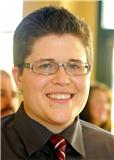 lace: Kathryne Young [pictured], of Woodside, CA, wins $1200 for “Roadrunner.” Her story will be published in the Winter 2012 issue of Glimmer Train Stories, out in November 2011.
Second place: Jennifer Tomscha, of Ann Arbor, MI, wins $500 for “Sure Gravity.” Her story will also be published in an upcoming issue of Glimmer Train Stories, increasing her prize to $700.
Third place: Kate Rutledge Jaffe of Missoula, MT, wins $300 for “Talk About the Weather.”
A PDF of the Top 25 winners can be found here.
Deadline soon approaching for Family Matters: October 31
This competition is held twice a year and is open to all writers for stories about family. Word count should not exceed 12,000. (All shorter lengths welcome.) Click here for complete guidelines.
Powell’s Books Offers Anne Rice Library Collection
Powell’s Books of Portland, OR acquired and is offering for sale a collection of books from the personal library of legendary author Anne Rice. “Included in the collection are editions signed or annotated by Ms. Rice, and many have her library markings on the spines. The collection showcases her love of literature and writing and reveals a true intellectual curiosity — classic philosophy, the Brontes, biblical archaeology, and Louisiana history are just a few of the subject areas represented.”
Chetnia Bilingual Issue on Chekhov
 How can one understand what Chekhov is to Russian culture and Russian life? “Only by reading him,” says Tamara Eidelman in the latest issue of Chtenia: Readings from Russia. The Fall 2010 issue is a bilingual focus on Chekhov, including a translation of writing from Ivan Bunin, Russia’s first Nobel Laureate for literature (1933), and several of Chekhov’s stories both in Russian and in English translation: A Horsey Name, A Foolish Frenchman, The Student, The Seagull (excerpt), The Man in a Case, Gooseberries, and About Love. The volume is completed with an essay by Sasha Chyorny, “Why Did Chekhov Quit This Earth So Soon?”
Dunstan Thompson
The contemporary American literary scene is as vibrant and diverse as any other art community; thousands of writers and millions of readers participate and interact on a daily basis. But looking back to any past period of the community – say the 1940s and 50s, somewhere in the layover between modernism and postmodernism – the world of letters looks sparse. One can’t help but imagine that literary circles must surely have been as wide and broad as they currently are. But it feels as if so few writers have lasted even such a meager sum of time. We’re often led to believe that there’s a reason past artists fall into obscurity. D. A. Powell and Kevin Prufer prove that notion wrong. Continue reading “Dunstan Thompson”
Room
I was website hopping the other day, and came to the Brooklyn bookstore BookCourt's list of Top 10 fiction bestsellers. On their hardcover list, at #3, was Room by Emma Donoghue, which they call "a perfect example of that book (maybe Wolf Hall is also in this category) that's been a total success without being read by a single person under the age of 30." I am here to attest that I am a person under 30 (though not for long) who has read the book. Not only read it, couldn't put it down. While I was on vacation in Miami. It is that good. Continue reading “Room”
The Physics of Imaginary Objects
Occasionally you stumble across a piece of literary fiction so eloquent in its style, honest in its material, and direct in its approach that it resonates with you days, weeks, years after you read it. Such literature is valuable for both its simple sensory pleasure and its faith-restoring powers. Tina May Hall’s The Physics of Imaginary Objects is one of these intelligent, enlightening, and brazen books that you’ll want to place on your shelf at eye-level so you will remember to keep picking it up. Hall’s poetic style and articulate precision give this book a revolutionary quality. It nudges you along with an air of solemn importance and modest wisdom. Expertly composed and awesomely beautiful, Hall’s hybrid of poetry and prose is neither sparse nor excessive, sentimental nor detached, diffident nor ostentatious. It is, however, seamless – so delicately woven you forget it ever required stitching in the first place. The words fit together so effortlessly it sometimes feels like they just naturally occurred that way. Continue reading “The Physics of Imaginary Objects”
Mentor
Mentor: A Memoir by Tom Grimes details the relationship of the author and his friend, teacher, and surrogate father, Frank Conroy. It opens with their initial meeting: Tom, a budding writer considering MFA options, is snubbed by Frank after a reading. "I spotted Stop-Time [Conroy's own critically-acclaimed memoir] on a high shelf and reached for it … I struggled to tear it in half. When I failed, I ripped out pages by the handful until I'd gutted the thing, splitting in two the author's name and the book's title … I turned and said, 'Fuck Frank Conroy.'" Continue reading “Mentor”
Striking Surface
Striking Surface by Jason Schneiderman focuses on death, religion, and the violence and exile of war. Though writing on such serious topics, Schneiderman still manages to weave in pop culture references, referencing several leading ladies such as Grace Kelly in his poem “Billboard Reading,” Sandra Dee and Lana Turner in “Susan Kohner (Douglas Sirk’s Imitation of Life),” and Audrey Hepburn in “Elegy VII (Last Moment).” Continue reading “Striking Surface”
Metrophilias
A geographical whirlwind, Connell’s debut collection presents 36 cities in alphabetical order (some letters get more than one hit … why eschew Moscow for Madrid? Xi’an, on the other hand, has no X peer). Each destination offers a story, a scene, or a vignette – as I read I came to think of them as little windows – into the city. A moment, a place, a person. Each encounter is an intense mixture of location and love. Continue reading “Metrophilias”
Answer to an Inquiry
Swiss writer Robert Walser opens Answer to an Inquiry, originally published in 1907, by stating his purpose for writing it: “You ask me if I have an idea for you, sir, you ask me to draft a sketch, a play, a dance, a pantomime, or some other thing you could use, that you could depend on.” From there, Walser lists the materials needed for costumes, set, and lighting, and gives step-by-step instructions with commentary on how to convey true suffering to an audience: Continue reading “Answer to an Inquiry”
Drain
Davis Schneiderman vividly creates a desolate and backward futuristic word in his novel Drain – a world that is made all the more terrifying for its uncanny resemblance to our own. Part sci-fi/fantasy (though certainly not the kind you want your kids to read), part psychological thriller, and part commentary on contemporary religion and politics, Drain follows numerous paths and occasionally fights the urge to draw extraneous ideas into its already-teeming domain. Continue reading “Drain”
The Quickening
In a brief, illuminating YouTube interview on the publisher’s website, Michelle Hoover discusses the genesis of The Quickening. She discovered a typewritten memoir, composed in 1950, by her great grandmother about her experiences as a farmer and farm wife. The memoir of twenty or more pages covers much of this strong woman’s life in the first half of the Twentieth Century. Hoover used this story and further research on family history and U.S. farm life as a springboard to create the imaginative world of this novel. Continue reading “The Quickening”