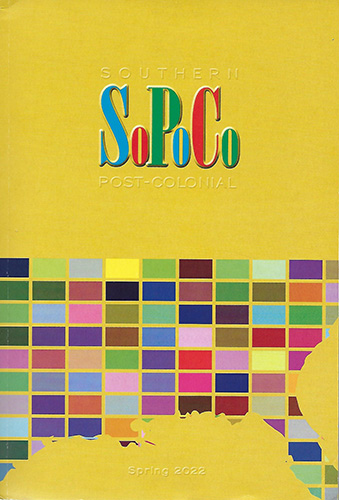
 The Summer 2011 issue of The Georgia Review includes a special feature on Pulitzer Prize-winning poet Stephen Dunn: “Many a Beautiful Strangeness.” The feature is well deserved, as TGR Editor Stephen Corey notes: “…since 1980 The Georgia Review has, up through this issue, presented more than fifty of Stephen Dunn’s poems and five of his essays—plus an interview conducted by Laura McCullough [available in full on the TGR website] and a self-conducted ‘intraview,’ both of which appear here in Summer 2011. All told, Stephen Dunn’s Georgia Review poetry offerings would fill a book of nearly one hundred pages — W. W. Norton, are you listening? — and the full body of his contributions would just about flesh out an entire issue of our journal.” Read the full editorial online here, as well as the full table of contents here.

NewPages Blog
At the NewPages Blog readers and writers can catch up with their favorite literary and alternative magazines, independent and university presses, creative writing programs, and writing and literary events. Find new books, new issue announcements, contest winners, and so much more!
BPJ Devotes Issue & Forum to “The Logic of Yoo”
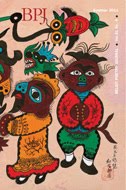 The Fall 2011 issue of Beloit Poetry Journal is devoted to chapbook of poems which come from a larger manuscript of the same name, Michael Broek’s “The Logic of Yoo.” The poem “probes the moral logic of George W. Bush’s legal counsel John C. Yoo from the perspective of a graduate student who supplements his income by writing academic papers for hire. Ten years into the ‘war on terror,’ the issues the poem raises remain acutely relevant.” (BPJ) The BPJ website includes a PDF of the first dozen pages of the poem. The BPJ website will also feature Michael Brock moderating a discussion of The Logic of Yoo for the September Poet’s Forum. (Great opportunity for teachers and their students!)
[Cover Image: Photograph by Linda Connor]
New Lit on the Block :: Mixed Fruit
 Mixed Fruit is a bi-monthly online publication co-founded by editors Lindsay Shields and Abby Norwood. Mixed Fruit has an varied and energetic editorial staff reading poetry, fiction, creative nonfiction, translations, and reviewing art submissions.
Editors include Kat Lewin (fiction), Jessica Plante (poetry), Matthew Burnside (fiction/poetry), Kea Wilson (fiction/Spanish/Greek translation), Courtney Thomas Vance (fiction), Summer Greer (poetry/Thai/German translation) and contributing editors Peter Alan Herbert (fiction/copy), Bethany Sarah Startin (poetry reader/French/Ancient Greek/Latin translation), Donna Vorreyer (poetry reader), Olga Mexina (Russian translation), Elisa Fernandez-Arias (Spanish/French translation), and Paula Bertr
Wave Books Subscription = Free Festival Pass
In addition to receiving all the books published by Wave Books in 2011, this year’s subscription ($75) comes with complimentary passes to the Wave Books Poetry Festival: Three Days of Poetry in Translation ($25 value), coming up November 4-6 in Seattle. Even if you can’t attend the festival (donate your passes?) subscribers will receive all materials included in festival participant packets, including limited edition pamphlets and a handmade book.
For a full list of the books included, visit Wave Books website.
Passings :: Scott Wannberg
Scott Wannberg, a key figure in Los Angeles poetry, has died (via LA Times JacketCopy).
WLT: Poetry Untethered
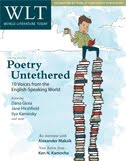 The newest issue of World Literature Today (celebrating 85 years of continous publication) includes the special section “Poetry Untethered: 10 Voices from the English-Speaking World.” In addition to their regular content, this section includes contributions from John Mateer, Dana Gioia, Stephanie McKenzie, Nicholas Samaras, Bill Manhire (“Cream Torpedoes: Recent Poetry in New Zealand”), Maya Khosla, Ilya Kaminsky, Jane Hirshfield (“What is American in Modern American Poetry: A Primer with Poems”), Ngwatilo Mawiyoo, and Ian Brinton (“Pods, Presses, and Pamphlets: Poetry in England Today”). Also included is an extensive interview by Michelle Johnson with Dana Gioia.
A full table of contents is available online with access to some of the above listed features. WLT also offers exclusive web content available for all visitors.
Puerto del Sol Contest Winners
 The Summer 2011 issue of Puerto del Sol features works by the winners of their Poetry and Fiction Contests:
2011 Fiction Contest (Dawn Raffel, judge)
1st Place: Joe Aguilar, “The Flood”
2nd Place: Jen Bergmark, “Boyle Heights”
3rd Place: Kellie Wells, “The Incinerating Place”
2011 Poetry Contest (Julie Carr, judge)
1st Place: Amy Woolard, “The Housewarming”
2nd Place: Amy Woolard, “The Petty Arsonists”
3rd Place: Denise Leto, “Jaw Simulacra”
Best of Net Submissions Sought
 From Sundress Publications: “Since 2006 the Best of the Net Anthology has sought to represent the best of the online literary world in poetry, fiction, and in 2010 non-fiction. Sundress Publications is seeking submissions to the sixth volume of Best of the Net. This project aims to represent the expanding, although often disregarded, online venue and bring more prestige to the innovative and continually growing medium. This collection intends to bring greater respect to the voices of those writers who choose to publish their work online. Our last issue included work by poetry by B.H. Fairchild, Karin Gottshall, Maxine Lopez-Keough, fiction by, Chimamanda Ngozi Adichie, Max Everhart, Dominic Preziosi and non-fiction by Amy Clark, Mark Dowie, and Emma Trelles. Submissions from editors will be open from July 1 to September 30th. Winners will be announced in February, 2012.” Full details available here.
New Lit on the Block :: The Muse (India)
The Muse: An International Journal of poetry is a new biannual online publication with Chief Editor Pradeep Chaswal and Editors Dr. Mohammad Arif and Deepak Chaswal.
The first issue includes poetry by A. D. Winans, Adam Bogar, Adrienne Wolfert, Alan Lindsay, Anca Vlasopolos, April Avalon, Benjamin Myers, Boghos L. Artinian, Carl Scharwath, Carrie Allison, Chris Tanasescu, Christina Murphy Dalel Sarnou, Devreaux Baker, Gale Acuff, Hal O’Leary, Hugh Fox, Jennifer C. Wolfe, Judith Prest, Kathleen Specter, Kenneth Pobo, Linda Appleby, Michael D. Sollars, Michael Lee Johnson, Mike J Gallagher, Paul Lobo Portuges, Phillip A. Ellis, Raj Vatsya, Richard Oko Ajah, Rebeca Sara, SamEisenstein, ShradhaKamra, ThomasZimmerman, Valentina Cano, Victor W. Pearn, and William John Watkins.
Also featured in this issue are research papers and essays “Pet Trees & Dancing Bay Ponies” by Joseph Powell, “How Dangerous Is Digital Literature?” by Felix Nicolau, and “A Tribute to Raymond Garlick (1926 – 2011)” by Byron Beynon, as well as interviews with Hugh Fox and Al Beck and book reviews.
The Muse is open for submissions of poetry, research papers, essays, and reviews. The deadline for the December issue is November 10.
New Lit on the Block :: Anobium
 Based in Chicago, but with “values that extend beyond borders,” Anobium aims to “print literature in a digital world” and do so with quality and brevity, keeping the volume small (5″x&’, 84pp), portable, durable (laminated matte cover with 55lb stock), and accessible ($10).
Anobium‘s masthead is: Senior Editor Mary J. Levine, MFA; Managing Editor Benjamin D. van Loon, BA; Assistant Editors Jon-Erik Means, BA, Michael Zielinski, BA, Lauren Monokian, BA; Illustrator & Assistant Designer Jacob van Loon, BFA; and Executive Administrator Sarah E. Docherty, BM.
Anobium: Volume 1 (Summer 2011) features new writing from Laura Carter, Jennifer Collins, William Doreski, Eric Evans, Ricky Garni, Jonathan Greenhause, Luke Irwin, Rich Ives, Eddie Jones, J.S. MacLean, Claire McCurdy, Bethany Minton, Thomas Mundy, Ben Nardolilli, James Payne, Stephanie Plenner, Graham Tugwell, Meredith Turits and Susan Yount. Also included is a feature story and interview with “Chicago favorite,” Joe Meno.
Submissions for volume 2 are now open for poetry and prose. Specific guidelines are available on the Anobium website.
Flannery O’Connor Short Fiction Award Winners
 E.J. Levy, of Washington, DC, and Hugh Sheehy, of Brooklyn, NY, have been named the winners of this year’s Flannery O’Connor Short Fiction Award. Levy’s collection MY LIFE IN THEORY and Sheehy’s collection THE INVISIBLES will be published by the University of Georgia Press and will be available in Fall 2012.
The competition, now in its twenty-eighth year, seeks to encourage the writers of excellent short stories and bring their work to a wider audience by offering publication of a book-length collection and a $1,000 prize. The Flannery O’Connor Award has helped launch the literary careers of such previous winners as Ha Jin and Antonya Nelson.
NewPages Updates :: August 15, 2011
New additions to the NewPages Big List of Literary Magazines
Blueline  poetry, fiction, nonfiction, art, photography
Still Point Arts Quarterly fiction, essays, articles, art
Valley Voices literature, culture, criticism
The Worcester Review poetry, fiction, essays, photography, graphic art
100 Word Story [O] prose poetry, prose, essays, interviews, photo stories
Aldus [O] translations, poetry, prose, essays
Catfish Creek undergraduate poetry, fiction, nonfiction
The Corradi poetry, prose, artwork
Plume [O] poetry
Printer’s Devil Review [O] poetry, fiction, nonfiction, art
Urban Confustions poetry, fiction, nonfiction, art
Printer’s Devil Review [O] fiction, nonfiction, art, poetry
Aldus [O] works in translation (all genres) poetry, prose, essays on translation
Connotation Press [O] – poetry, fiction, nonfiction, drama, screenplay, graphic art, visual art, interviews, reviews
Newly added to NewPages Guide to Misc Literary Blogs and Websites
The Literarian [O] fiction, interviews
New additions to the NewPages Big List of Alternative Magazines
NEA Arts Magazine [O] – National Endowment for the Arts
New additions to NewPages Guide to Independent Publishers & University Presses
Connotation Press – poetry, fiction, nonfiction, drama
eohippus labs
[O] = mainly online publication = mainly print publication
New Lit on the Block :: The Washington Pastime
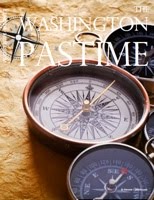 The Washington Pastime is an online journal edited by founder Paul Karaffa and Laura Bolt. Karaffa’s motivation for starting the journal was a 2010 study from Central Connecticut State University in which Washington DC Metropolitan area was found to be the most well read urban area in the United States. “But Washington, DC.” Karaffa writes, “did not have a professional literary magazine representing its stake in contemporary American literature. The Washington Pastime was founded as an electronic and print publication based in Washington, DC committed to publishing the best in literary and genre fiction.”
The first issue, available on The Washington Pastime website and also as a PDF download, includes literary fiction by Matthew Ward, science fiction by Michael Anthony, horror fiction by Matt Walker, crime/mystery fiction by Jeanette Samuels, and experimental fiction by Keith Laufenberg.
The Washington Pastime website also includes a section called “Author’s Resource,” offering a developing library of information on publishing, writing fiction, the future of publishing, and “words of caution” for writers entering publishing.
The Washington Pastime is open for submissions for its next issue. Writers may submit adventure, fantasy, horror, science fiction, mystery, romance, thriller, western, and general literary fiction. Submissions for articles about the writing industry are also considered for the “Author’s Resource” page as well as topics of interest and controversy for an upcoming feature called “Expanding Scope.” The Washington Pastime offers a nominal payment for works published.
The Washington Pastime is also holding a contest for fiction and a Promising Young Author Prize for Fiction. See website for contest guidelines. The deadline for both contests is December 31.
Additionally, The Washington Pastime has an editor position open. If you are interested, see the “About” page on the site for more information.
Tampa Review: Art Blast from the Past
 Tampa Review 41 offers a unique volume by pairing contemporary stories and poems with antique art from the fifteenth century and the early twentieth century, as well as a special sampling of art from the Vorticist movement, a “lively alliance of literary and visual artists before World War I that included Ezra Pound, T. S. Eliot, Wyndham Lewis, and a famous literary magazine called Blast.”
New Lit on the Block :: Urban Confustions
 Urban Confustions is a biannual print and PDF (Lulu) publication, featuring “urban tales, poetry, non-fiction, and art from women writers and artists living in urban cities of the world.” Staffing the publication are Editors Rheea Mukherjee and Shilpa Kameswaran, Art Editor Tulika Ladsariya, and Rabia Mehta, Publicity and Marketing. Urban Confustions also holds public readings in various cities twice each year.
Each month, Urban Confustions “spotlights” an author or artists with a bio and a link to specific works by each. Featured thus far: Patricia Lee Martinovic, Teresa Chuc Dowell, Anna Saini and Emily Rutledge.
The first issue of Urban Confustions features works by Amelia Whitcomb, Sarah Rosenberg, Anna Saini, Jenny Fan, Rohini Sahni, Rachel Noelani Bovee, Shilpa Kameswaran, Tulika Ladsariya, Anna Cherednikova, Diane Ponder, Suzanne Hilal, Emily Rutledge, Archana Prasad, Jasmine Kwong, Susan Redekar, Teresa Chuc Dowell, Rabia Mehta, Jina Joan D’cruz, Shelly Bhiol Sood, Sonia Sarkar, Bo Melissa Schwabacher, Tishani Doshi, Janice Sapigao, Srividya Suryanarayanan, Prasanna Surakanti, Gathima Asghar, Ambika Ananth, Sampada Chavan, Patricia Lee Martinovic, and an interview with author Brinda Charry.
Urban Confustions invites women living in the urban centers of the world to submit fiction, non-fiction, poetry and art for their winter issue. Deadline for submissions is November 10.
Manoa: Voices of the Okinawan Spirit
 The newest issue of Manoa is Living Spirit: Literature and Resurgence in Okinawa. The publication is a collection of works from the Ryūkyūs, “Most of which have never been translated into English, or are newly translated for this volume. This issue is a “sister” volume to Manoa 2009, Voices from Okinawa – a collection of plays and essays by Okinawan Americans. In addition to the written works, this Living Spirit issue includes a series of photographs by Higa Yasuo, whose subjects include three decades of his study and recording of ancient and sacred religious festivals of Okinawa. Visit the Manoa Voices of the Okinawan Spirit blog for more information.
Free eBook :: A Worker’s Writebook by Jack Matthews
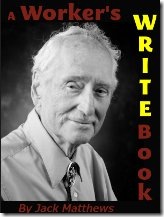 A Writer’s Writebook, in which 86-year-old author & distinguished writing professor Jack Matthews shares secrets & strategies about good storytelling, is free to download until Sept. 4 from his blog Ghostly Populations.
New Lit on the Block :: The Found Poetry Review
 The Found Poetry Review is a quarterly online poetry journal “celebrating the poetry in the existing and the everyday.” FPR publishes “found poems, centos, erasure poems and other forms that incorporate elements of existing texts.”
To clarify this to both their readers and writers itnerested in submitting works, FPR includes content with links on the definition of found poetry, examples of found poetry, and found poetry and fair use standards.
The Summer 2011 inaugural issue includes works by Christine Pacyk, Howie Good, Jill Crammond, Johnny Chinnici, Christina Burress, Jeanne Shannon, Mark Blaeuer, Clare Kirwan, Andrea J. Dickens, Claire Ferris, Jennifer Saunders, Guy Torrey, and Ed Higgins.
FPR is accepting submissions via Submishmash for the Fall 2011 issue, deadline September 30, 2011.
FPR is also holding their first contest, in which all contest submissions must be found poems derived from “How to Analyze People on Sight” by Elsie Lincoln Benedict and Ralph Paine Benedict, available as a free e-text through Project Gutenberg. The contest deadline is August 31, 2011.
Malahat Long Poem Prize 2011 Winners
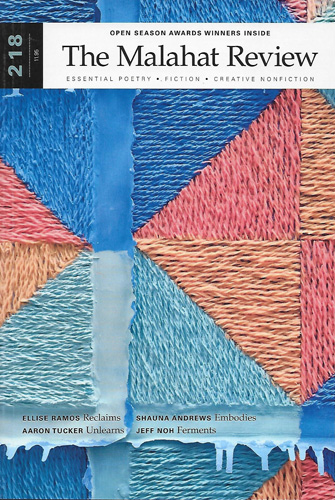 “The Constant Gardener” by Maggie Schwed and “The Sun Estate” by Julie Joosten were selected as the Malahat Long Poem Prize 2011 Winners. Each receives a $1000 cash prize as well as publication. Their poems appear in the most recent issue of Malahat (Summer 2011), and an interview with each appears on the Malahat Review web site.
The Malahat Long Poem Prize is held every second year. The deadline for the next contest is February 1, 2013. Malahat Review sponsors a number of contests, guidelines for which can be viewed here.
National Student Writing Contest
 The YES! National Student Writing Competition demonstrates how teachers can use YES! Magazine stories as the basis for thought-provoking writing, and gives students an opportunity to voice their opinions and show off their exemplary writing. Each quarter, students will have the opportunity to read and respond to a selected prompt. The prompt will be available on Sept 6.
Now is the time to think about including the YES! National Student Writing Competition in your fall curriculum. For fall 2011, students will read and respond to the YES! article, “Why My Dad’s Going Green.”
Contest Age Categories:
Grades 5-8
Grades 9-12
College/university
Adult continuing education
New Lit on the Block :: Manor House Quarterly
 Organized by Dane Cardiel, contributing editor, Manor House Quarterly is “a collaborative effort of individuals whose diverse interests range from mixed-media to poetry, photography to music composition, story-telling to illustration, and more. The quarterly publication is simply the blending of these interests speaking toward a given concept.”
The first issue of MHQ is available online using Issuu and includes writing from Chloe Sparacio, Ethan Linstrom, Jeff Murray, Kohn Ashmore, Justin Wright, Andrew Gumm, Gaelan Gilbert, Sean Sand, Jared Callahan, Theron Allen Gregory, Vanessa Nelson, and Blake Nelson, and visual art from Casey Galanter, Frank Scott Krueger, Elisha Medina, Garrett Richardson, Jeff Allen, Kalika Kastein, Megan Gilbert, Scott Linger, Aubrey Perkins, Lauren Whisnant, and Emily Spencer.
Submissions of written content are being accepted for the next issue of MHQ, themed “1877.” The deadline is August 12.
Main Street Rag 2011 Poetry Book Award Winners
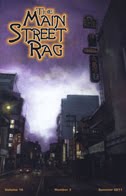 Elegies for New York Avenue by Melanie Henderson of Washington, DC. won the Main Street Rag 2011 Poetry Book Award.
The deadline for the next Poetry Book Award is January 31, 2012. All entries are considered for publication.
Finalists/Runners up (in alphabetical order) are:
Banjo String Theory by Lynn Pattison, Kalamazoo, MI
Devil’s Messengers by David Allen Sullivan, Santa Cruz, CA
Dopplegangster by Patrick Moran, Fort Atkinson, WI
Heinz 56 by Amanda Reynolds, Pittsburgh, PA
Silver by Jason McCall, Tuscaloosa, AL
System of Hideouts by Heather McNaughter, Pittsburgh, PA
Zero is the Whole I Fall into at Night by Becky Thompson, Jamaica Plain, MA
Because the primary purpose for the MSR contest is to select manuscripts for publication, all of the finalists have been offered publication.
MSR also welcomes back Foster C. Hunter, who will be helping “Build Better Books” in the print and bindery operation.
Anobium Books Education Discount
Anobium Books is a Chicago-based, independent publisher founded in 2011 by Benjamin van Loon and “Mary J. Levine.” Anobium Books’ Education Discount Program will run indefinitely while supplies last, and offer free shipping and a 20% discount to Chicago Metropolitan Area students, faculty and staff. Beginning on July 31st, Anobium: Volume 1, which features new writing from Jonathan Greenause, Rich Ives, Joe Meno and others will be the first title available in the program.
New Lit on the Block :: Country Music
 Country Music is an online biannual journal of poetry edited by Scott Abels. In addition to the poetry, each of the two issues now available include special features, such as “The Darkness and the Popcorn: Tyler McMahon’s Correspondence with Denis Johnson” (Volume 1), a selection of poems with an introduction (explanation) of the very quirky Barcelona Poetry Machine (Volume 2), and “Contributors Respond to Art and Economics” (Volume 2).
Issues #1 and #2 include works by Dan Chelotti, Sally Molini, Jennifer H. Fortin, Nate Pritts, Angela Veronica Wong, Alen Hamza, Donald Illich, Jon Thrower, Ron Riekki, Matt Ryan, Tyler Gobble, Peter Jay Shippy, Brandi Homan, Rob MacDonald, Rich Murphy, Kyle Thompson, Katie Condon, Andrew Morgan, Philip Byron Oakes, Francis Raven, Michael Schiavo, Clay Matthews, Lucy Biederman, Matt Hart, Samuel Day Wharton, Peter Davis, Amber Nelson, Jim Goar, and Jackie Clark.
Submissions are currently open “with no firm guidelines.”
[Issue #2 Art by Vince Hazen]
Fact-Simile Trading Cards
 In addition to their twice annual, large-format (8.5×11) literary journal, Fact-Simile has brought back their of Poetry Trading Cards. Printed on traditional trading card stock with a plastic sleeve, there are several ways to get them in your hands – 99 cents each or $10 for the year (+s/h). You can still subscribe now and get the “back issues” as well as receive monthly delivery for the remainder of the year. Cards from the 2010 series are also still available.
The 2011 Poetry Trading Cards thus far:
January/Nathaniel Tarn
February/Charles Bernstein
March/Rachel Blau DuPlessis
April/Joanne Kyger
May/CA Conrad
June/Amiri Baraka
July/Charles Alexander
New Lit on the Block :: 100 Word Story
 100 Word Story is a new online literary publication edited by Grant Faulkner and Lynn Mundell, with the goal to publish monthly issues of stories and an annual anthology of 100 100-word stories. The publication features prose, prose poems, and interviews.
100 Word Story currently includes works by Paul Strohm, Barbara Goldberg, David Cotrone, Karen Benke, Janice Lynch Schuster, Kate Hill Cantrill, Kermit Moyer, and an interview with Paul Strohm on “the art of the 100 word story.”
100 Word Story offers a monthly theme as well as a monthly photo prompt. Submissions are open and accepted through Submishmash.
What I’m Reading :: 77 Reasons Why Your Book Was Rejected
 77 Reasons Why Your Book Was Rejected by author and agent Mike Nappa (Nappaland Literary Agency) takes a hardcore look at editorial, marketing, and sales perspectives on why a book is rejected. His tone is quick-witted and conversational, and he is in no way here to hold your hand and make you feel better about your rejections. He is in-your-face (“Your Writing is Crap”), realistic (“Your Book Costs Too Much to Make”), and the helpful voice of a friend you need (“You Aren’t Able to Significantly Differentiate Your Book from the Competition”).
Nappa follows up each of the 77 Reasons Why with “What you can do about it,” offering two or three tips for each reason. He notes early on that you may not like what he has to say, but he is being as honest as he can. The book begins, “I make it my goal to reject every book proposal you send me in sixty seconds or less.” This may sound arrogant, but keep reading: “The sad part about this goal of mine is that it’s remarkably easy to accomplish. Too easy, in fact.” Nappa himself has had numerous books published, but also received thousands of rejections, so he isn’t taking any kind of industry-moral high road here. He really is talking to readers like the friend they need to guide them through this seemingly mysterious process. This book, he says, is about “learning why we fail – and then turning that knowledge into success the next time around.” Or at least making that rejection less of a bitter pill to swallow.
Given the 77 reasons in here, only a few could be taken as personal – the rest, he points out, are purely business (which might explain why so many find it “mysterious”). Nappa offers a detailed explanation of what happens once an acquisitions editor takes a book on to pitch to the publisher. It’s not pretty, and it explains why some books never make it past that stage. “Remember,” Napa writes, “publishing is an industry – a business that has at its core the innate desire for survival. And, as for any business, survival means profit. A publishing house that doesn’t actively pursue profitability – no matter how noble or sublime its content goals – simply won’t be publishing books for very long.”
Nappa addresses reasons for rejection from three main perspectives: editorial, marketing, and sales. Some of the examples he provides from his years of experience are shockingly funny (as in, someone really did that?). But what may seem like the “right” approach from the writer trying to pitch a book is exactly what knocks that book out within those first sixty seconds of consideration. Nappa warns his readers, “I will always be honest with you in this book. Sometimes that may make you angry with me. I apologize in advance…but please don’t take it personally. I’m just trying to help you by sharing from my twenty-plus years of experience in publishing.”
Nappa welcomes readers to disagree with his advice if they have had different experiences, which is a good reminder that no one “advice” book of this kind is in any way absolute in being right or naming what is wrong. There are as many experiences with publishing as there are writers trying to get published and agents accepting or rejecting those attempts.
While it seems like this book focuses on the goal of writers who want to run with the big dogs in publishing, that might just be because of Nappa’s work experience in the more cut-throat levels of the industry. Many of his best stories (both of failures and successes) come from working with bigger publishing houses. Still, Nappa offers solid advice for ALL writers to consider, whether pitching to an agent or directly to a small, indie publisher, like those listed on NewPages.
I am personally not a writer trying to get published, but found Nappa’s book extremely insightful (in addition to entertaining), just reading about his work as an agent and acquisitions editor, and working in the industry with other major decision-makers. It’s not a book that needs to be read cover to cover; with each reason and advice on what to do about it taking only a few pages each, it’s easy to pick out specific issues of interest.
77 Reasons is available online from Sourcebooks, where you can also see the full table of contents and read an excerpt from the book.
Avery Staff Changes & Contest Winners
 The newest issue of Avery welcomes Nicolette Kittinger as co-editor, while saying good-bye to Emma Straub and Michael Fusco, and Founding Editor Andrew Palmer stepping over to become a reader.
The issue includes winners of the Second Annual Small Spaces Fiction Prize as judged by Junot Diaz: Winner Benjamin Reed, and Runners-Up Pamela Balluck and Kurt Scott, and the winners of A Very Avery Flasher Contest: Winner B.C. Mitchell, Runner-Up Kirsten Clodfelter, and Honorable Mention Benjamin Reed. (Mitchell’s and Reed’s ‘Flashers’ are available on the Avery website.)
[Cover art by Abi Daniel.]
New Lit on the Block :: Catfish Creek
Catfish Creek is a national undergraduate literary journal from Loras College intended as a showcase for undergraduate writers both nationally and internationally. Catfish Creek is currently accepting submissions of fiction, poetry, and literary nonfiction. Any student currently registered in an undergraduate program is eligible to submit. The reading period for Catfish Creek is Septermber 1 – November 15.
The staff of Catfish Creek currently includes Editor-in-Chief Brigette Yanes, Fiction Editor Sarah Riesberg, Nonfiction Editor Maria Rauen, Poetry Editor Annie Newberry, and Faculty Advisor William Jablonsky.
New Lit on the Block :: bioStories
bioStories is a new online literary web publication edited by Mark Leichliter, writer and freelance editor who publishes fiction, poetry, and essays under the pseudonym Mark Hummel.
bioStories features a blog-post publication of biographies, with some of the portraits featured on the main web site. bioStories does not look to feature the already overly-featured celebs and well-knowns; instead, Leichliter notes, “We particularly look for work that offers slices of a life that help the reader imagine the whole of that life, work that demonstrates that ordinary people’s experiences often contain extraordinary moments, visionary ideas, inspirational acts, and examples of success and failure that prove instructive. In short, we believe every life displays moments of grace.”
Currently, the site includes works by Murray Edwards, Kimberly Hamilton, Jona Jacobson, Hank Merrell, Peter Derk, and Wilmer Frey
Additionally, the site includes Noteworthy Bios that highlight inspiring stories of ordinary people’s lives that make it into the news as a “little reminder that there are people around us practicing life-changing and inpirational acts if only we pay attention.”
bioStories is open for submission or original, nonfiction work.
Kaleidoscope Animals Issue
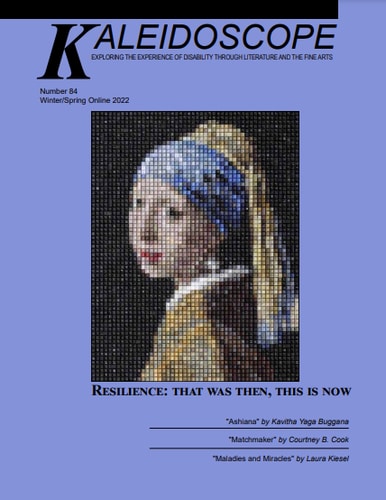 Issue Number 63 of Kaleidoscope: Exploring the experience of disability through literature and the fine arts, is themed “Animals That Make a Difference.” This is a great issue for animal lovers, from the editorial by Gail Willmott on her life-long love affair with cats, to Deshae E. Lott’s feature essay, “It’s Not About the Dog,” the issue is jam-packed with essays, poetry, fiction, and creative nonfiction all centered around animals: dogs, cats, rabbits, birds – with a particular focus on the human-animal bond in relation to issues of disability.
New Lit on the Block :: Plume Poetry
 Daniel Lawless is the editorial effort behind the newly launched Plume, an online publication of poetry. Plume, Lawless writes, “is a magazine dedicated to publishing the very best of contemporary poetry,” and though the first issue is “expanded” to include 16 works, the monthly issues will be limited to 12 poems each.
The Plume home page features a slideshow of quotes, short poems, aphorism, snippets, and excerpts of 50 words or fewer. Submissions of this content are accept as well as original poetry submissions for each issue. While Plume will be presented in English, international contributions are welcome, with plans for bilingual editions.
Issue one features poems by Stuart Dybek, Amy Gerstler, Mark Jarman, Kimberly Johnson, Christopher Kennedy, Nin Andrews, Maureen McLane, Rae Armantrout, Jean-Michel Maulpoix, Charles Bernstein, Alicia Ostriker, Carl Dennis, Terese Svoboda, Denise Duhamel, and G.C. Waldrep.
Issue 2 will include works by from Jay Parini, John Kinsella, Lawrence Raab, Linda Pastan, Paol Keineg, Stephen Dunn, Elaine Equi, David Huddle, Cornelius Eady, and others.
[Cover Art by Al Gorman]
Annalemma’s “Creation” Issue
 Issue Eight of Annalemma is themed “Creation” and came about, Editor Chris Heavener writes in the intro, when a friend of his suggested he “do an issue of Annalemma all about making things. It would be nonfiction focused. Maybe it would have a few fiction pieces thrown in there for fun, but the contents would consist mainly of profiles and interviews with woodworkers, chefs, designers, manufacturers, and artisans of all stripes. It would be a celebration of craft, of people who devote their lives to a trade and do what they do with grace, precision, and beauty.”
The resulting issue includes Barry Grass talking with Belgium artesian brewer Dany Prignon of the Fantôme Brewery, designer/dressmaker Jen O’Malley on the American history of the bridal gown, and author/activist Anne Elizabeth Moore on gender inequality in the world of comic books – among many other “creation” themed works. The issue is also features a generous amount of full-color artwork and photography throughout.
[Cover art by Amber Albrecht.]
The Hudson Prize 2011 Winners
 Black Lawrence Press has announced that B.C. Edwards has won The Hudson Prize with his short story collection The Aversive Clause. Edwards also submitted his poetry collection From the Cyclopedia of Recipes for the prize and Black Lawrence has also optioned to publish that manuscript as well.
Finalist Valerie Bandura was also offered a contract for her entry Freak Show.
Poetry Finalists
Emily Rosko – Prop Rockery
Lindsay Illich – Anatomy Lessons
Rae Gouirand – Open Winter
Tony Trigilio – White Noise
Fiction Finalists
Elizabeth Kadetsky – The Poison That Purifies You
Emily Doak – Hatchlings
George McCormick – Salton Sea
Jennifer Cranfill – The Last of the Small Town Girls
Jessica Barksdale – Tuna for the Apocalypse
Randal Gentry – Evenings with Johnny Carson
Ron Tanner – Boom, Like That
Again the Far Morning
The oral transmission of verse is an intrinsic element of N. Scott Momaday’s literary heritage as a Native American storyteller. Though his accomplishments in fiction, such as the Pulitzer Prize-winning novel House Made of Dawn, are often more critically noted, poetry seems to come closest to his ideal expression of language due to its ancient relation to oral tradition. In his preface to Again the Far Morning, Momaday exalts the oral possibilities engendered by poetry’s primordial connection with the human voice: “We most often think of the poem as a composition in writing, but it may also be spoken or sung.” Continue reading “Again the Far Morning”
Arousing Notoriety / Your Trouble is Ballooning
This is a flip-over book, i.e. Gould’s poems run through half the book, then flip it over and Nelson’s poem runs through the back half. In the middle, between the two works is a portrait by—it is assumed—cover artist Kelly Packer, of a gentle-looking antlered beast which serves as a somewhat puzzling yet soothing centerfold: aside from having no clear connection to the poetry, the artwork stands in rather jarring visual contrast to the harsher, more abstract-leaning cover art. However, this does turn out to be a good pairing overall, especially since while the poets share in common a penchant for swift lines full of vivid imagery, each work diverges from the other when it comes to subject and concern. Continue reading “Arousing Notoriety / Your Trouble is Ballooning”
The Great Lenore
Maybe women saw Lenore and despised her at first, because she was lovely to such an unfair degree. But they met her, and she was the opposite of any negative attribute they could possibly have ascribed her. She was everything they wanted her to be, and she was everything they wanted to be themselves. Continue reading “The Great Lenore”
The City from Nome
James Grinwis possesses a wry sense of things. He’s aware “Stuff has a way of perpetuating itself” (“Valse Triste”), and also of how important familiar haunts are. Where the poet walks, eats, and sleeps services his needs in and around the writing of poems. Grinwis comments on such matters from an appropriate distance and gives due acknowledgement, how “knowing your own corner / of the city” (“Shapes”) does allow for “you realize it’s just you, your room” where writing happens alongside the big realizations, such as “stars absorb light / like nothing else absorbs light” (“Still Life”). His poems are full of the irony of the mundane. Continue reading “The City from Nome”
New California Writing 2011
From California publisher Heyday Books comes New California Writing 2011, the first of an annual publication that aims to be the America’s Best of writing from the Land of Fruits and Nuts. The book compiles poetry, fiction, and nonfiction; some are taken from larger works, others from newspapers and weblogs, and at least one is a commencement speech. Continue reading “New California Writing 2011”
The Brave Never Write Poetry
When an artist produces only one piece of work and when the work is anywhere close to stunning, it’s hard not to see it as representational of “promise” and lament what could have been. Daniel Jones authored only one collection of poetry during his lifetime and published it under his last name. Jones was twenty-six when it was published; after The Brave Never Write Poetry was originally published in 1985, he never again published a poem (though he did publish fiction). His sole collection was beautifully republished by Toronto’s Coach House Books in 2011. Continue reading “The Brave Never Write Poetry”
They Could No Longer Contain Themselves
They Could No Longer Contain Themselves brings together the winner of the third annual Rose Metal Press short short chapbook contest and four of the finalists from the fourth annual contest, resulting in an off-beat, varied, and vital flash fiction collection. The work presented here by Elizabeth J. Colen, John Jodzio, Tim Jones-Yelvington, Sean Lovelace, and Mary Miller shows a range of style and concerns; however, each author presents work that is lively and engaging, making this an essential collection to anyone interested in not just flash fiction but fiction in general. As Rose Metal Press editors Abigail Beckel and Kathleen Rooney write in the preface, “For all of the differences in writing style, technique, and theme, the characters throughout these five chapbooks are barely contained and bursting out.” Continue reading “They Could No Longer Contain Themselves”
Smith Blue
Selected as the winner of the open competition award for the Crab Orchard Series in Poetry, Smith Blue is a compelling collection about love and loss. The poems are prefaced by two quotes on loss, one from Gwendolyn Brooks and another from C.D. Wright, then moves into the short poem “After Opening the New York Times I Wonder How to Write a Poem about Love.” The poem details how the speaker hopes to love—“like God can love, sometimes”—and invites the reader to “Turn the page. / Turn another page,” concluding that “this was meant to be / about love. Now there is nothing left but this.” The introductory quotes and poem prepare the reader for the themes of love and loss that follow. Continue reading “Smith Blue”
The Wrong Blood
Manuel de Lope’s novel The Wrong Blood is about family secrets, set just before and after Spain’s Civil War, in the Basque region. As the author says in the introduction, “The circumstances include the death of a loved one, a rape, and a birth with disastrous results.” This is a story of women dealing with the effects of war, one rich, one poor, who nevertheless come together to help each other reach their dreams. A doctor living nearby is witness and also complicit to the strange agreement the two women make. Long after the death of one of the women, a young man’s arrival at the women’s house is enough to unravel the secrets of the past. Continue reading “The Wrong Blood”
Big Bright Sun
When reading the poetry of Nate Pritts, one gets the sense that his drive to write poetry originated from the ecstatic strain of the Beat Generation, namely through the poetry of Philip Whalen and the Ginsberg of “Supermarket in California,” as opposed to the more apocalyptic strain personified by Burroughs and Ginsberg’s “Howl.” This is the strain that has it that all of nature and even some man-made objects are imbued with a holy light and the possibility of transcendence. This is a source of yearning and salvation for Pritts, as he writes in the first poem of his fourth book, Big Bright Sun, “There are literally / hundreds of roses I could pick today // or leave for tomorrow & the evening / of a different year, the purple evening.” In the book, this is especially true of the sun: Continue reading “Big Bright Sun”
Field Work
From the beginning, Hadbawnik’s book offers itself as a tale of self-discovery: the precocious journey of a young poet brimming with literary-mindedness working towards further developing into a mature, aware-minded, somewhat older poet dutifully reporting back as his development continues. Unfortunately, rather than further sharpening and developing insights on writing or living, the work loses focus as it progresses and is worse off for it. Continue reading “Field Work”
The Archipelago
The Archipelago: A Balkan Passage is a work of fresh travel writing, a sort of intellectual pilgrimage. In the book, Robert Isenberg—a teacher and playwright in Pittsburgh—journeys to meet up with his high school friend Amila in Sarajevo. Rather than flying directly to the Bosnian capital, he begins his trip in Athens in order to criss-cross the Balkan states, educating himself and his readers on the people, places, and history of the region. Continue reading “The Archipelago”
Undone
Undone aptly describes the poems in this collection; they are poems of depth and density, stories told by a master storyteller, connecting the incidentals in life to the more profound. As a storyteller, Scates includes dialogue in many of her poems—“Friday Night Fights” recounts a conversation with friends during a game of Scrabble, which becomes more significant to the speaker, as he finds himself “doing my father imitation” with “everyone laughing / because I’m good at it though maybe feeling guilty / because no one knows it’s the anniversary of his death.” The imitation, something done as a joke during a Scrabble game, reveals deeper memories and pain in the speaker’s life, as he remembers his father as a “clown of a drunk.” Continue reading “Undone”
So You Know It’s Me
The twenty-two prose pieces collected together in Brian Oliu’s So You Know It’s Me were originally published on the “Missed Connections” section of Tuscaloosa’s Craigslist, and as such they follow the form established there—titled by the location where the missed connection occurred and the tag M4W (man-for-woman). Because Craigslist deletes posts after 45 days, the pieces, which were published every other day, began to disappear just after the final piece went up. The ephemeral nature of the project parallels the ephemeral nature of the moments where connections were missed, where they continue to be missed. Continue reading “So You Know It’s Me”
Thin Kimono
In Thin Kimono, Michael Earl Craig’s third book, Craig is a kind of Whitman for post-Google America, where everything is exchangeable and incongruous elements continually collide, creating an equalizing strangeness where no one thing is more important than another. This strangeness, however, doesn’t remove Craig from the world, but rather is his method of being in the world. Continue reading “Thin Kimono”
The Stranger Dissolves
In Christina Hutchins’ first full-length book, the speaker contemplates the development of the self within the body’s dissolution over a lifetime. Less abstractly, the poet-speaker interweaves meditations of aging within familiar surroundings which are themselves growing older, of slowly losing her father to Alzheimer’s while simultaneously finding renewal in her ripening love for her girlfriend. In the face of her life’s constant material change, she often sees a moment’s “beauty…in the distortion,” and she hears in the “small silences between waves” “the black hole in me.” And faced with the certainty of her loss, the speaker desires the clarifying sort of beauty found only within the quiet: Continue reading “The Stranger Dissolves”