Home » NewPages Blog » Page 187

NewPages Blog

At the NewPages Blog readers and writers can catch up with their favorite literary and alternative magazines, independent and university presses, creative writing programs, and writing and literary events. Find new books, new issue announcements, contest winners, and so much more!

New Lit on the Block :: Treehouse

Treehouse is a new online literary hub with weekly updates of creative nonfiction, fiction, short genre-benders and short screenplays or scenes.
The editors of Treehouse  hope their site “provides a place for new and established writers alike to exhibit writing that is brief in length, but interesting and unique in content” with a mission “to publish pleasingly unusual literature. Readers can find creative writing from new and established writers short enough to read on a coffee break, but good enough to linger over.”  Treehouse also publishes informative nonfiction about the contemporary literary scene.
Some current contributors include Roxane Gay, Kyle Minor, and Marie-Helene Bertino.
Treehouse editors plan, in addition to continuing weekly publications,  to add blog content, retrospectives regarding acclaimed writers, contests, and much more as they continue to grow.
Treehouse accepts submissions on a rolling basis via e-mail. All genres are accepted.

2 Bridges Review – Fall 2011

Published by the New York City College of Technology, 2 Bridges Review is a new magazine that seeks to publish both unknown and established writers and artists. The magazine is named after the East River Bridges that connect downtown Brooklyn with downtown Manhattan. Editors Kate Falvey, George Guida, and Yaniv Soha say that “between these bridges a community of writers and artists has found a home in the former warehouses and factories of New York’s most literary outer borough.” Continue reading “2 Bridges Review – Fall 2011”

Arroyo Literary Review – Spring 2012

Arroyo Literary Review, published by the Department of English at Cal State East Bay, takes advantage of its geography and the demographics of the San Francisco area to establish its identity as a multicultural literary feast. This issue features several international contributors, including writers associated with Peru, Japan, India, and China. Sixteen poets are represented—only three with a single poem—poetry translations from the Chinese and the German appear, and award-winning translator John Felstiner is interviewed. Four short stories ring changes on themes of love, creativity, and the absurd. The compact size and the feel of the cover communicate accessibility and quality. There is really nothing about this magazine not to like. Continue reading “Arroyo Literary Review – Spring 2012”

The Bad Version – Winter 2012

The Bad Version is a new literary magazine, and this is only its second issue. While showing many signs of promise, the magazine is clearly still suffering some growing pains. The mission statement on their website says that the name of the journal “comes from the collaborative art of screenwriting, where the first attempt at a scene, that wild idea that gets the process going, is called a ‘bad version.’ Likewise, this magazine is dedicated to beginnings: to pieces that are taking risks, trying to broach new ideas, experimenting with new forms, starting new conversations.” Continue reading “The Bad Version – Winter 2012”

BULL – 2012

BULL {Men’s Fiction} is best described as “handsome,” both for its subject matter and its appearance. The journal boasts a clean, striking design and attractive line illustrations by James-Alexander Mathers and Patrick Haley. I expected BULL editor Jarrett Haley to explain his journal’s subtitle in its debut print issue. Perhaps Haley’s silence is an indication that he wishes the reader to forge his or her own concept of what “men’s fiction” means. Continue reading “BULL – 2012”

Burnside Review – Spring 2012

Burnside Review is a beautiful and compact little book. Subdued and nostalgic tones greet the reader via full-sized photographs on both covers that complement each other and set the feel for the contents: introspective and aesthetically conscious poetry that begs the active attention of the reader. Burnside begins sans editor’s note or introduction, opting instead (and starting with the cover) to let the selections speak for themselves. As each page is turned, the magazine reveals a strengthening theme of contemplation of the human condition, with a sprinkle of Americana and a return to the nostalgia of the cover. Continue reading “Burnside Review – Spring 2012”

Court Green – 2012

I earmarked dozens of pages while reading through the magazine as it is absolutely brimming with bright pieces that speak for themselves. Many poems are just a few lines but force the reader to stop and ponder the full impact and resonating meaning. After I read Charles Jensen’s one sentence poem, I got up and started telling everyone in my house about the amazing poem I just read: “Planned Community.” I mean, wow! There is setting, characters, description, action, movement, sound, and the list goes on. So much is accomplished in just a short sentence. Court Green putting out a dossier for short poetry was not a tall order; there are many more fantastic poems just like it. Continue reading “Court Green – 2012”

CutBank – 2012

Published by the University of Montana, CutBank turns a neat trick: the journal reads like a great radio station sounds. Each short story, poem and piece of nonfiction flows into the next in an interesting, thematic way. A short story about a man who tickets rainwater collectors precedes a pair of poems about the calmer ways in which rain complements our lives. A short story featuring an uncle who stands in, slightly, for the boy’s father is followed by a nonfiction piece in which the author seeks to understand his uncle’s suicide. In this way, Editor-in-Chief Josh Fomon has created a sense of momentum, propelling the reader through the slim volume. Continue reading “CutBank – 2012”

Elder Mountain – 2011

I opened the third volume of Elder Mountain: A Journal of Ozarks Studies with some trepidation. I have limited knowledge of the Ozarks and literally no exposure to Missouri’s highlands, so I worried about reading and reviewing a journal dedicated to publishing poetry, fiction, and nonfiction about an area which was completely foreign to me. But, I need not have worried so: this volume is rich with details that help reconstruct the Ozarks in terms of place, people, and culture. Continue reading “Elder Mountain – 2011”

Front Range – 2011

Front Range “features work from writers and artists, not only from the Rocky Mountain West but from all around the world.” These writers, many of them award winners, seem to share a focus and connection with nature and their relationship with it. While poetry dominates the journal, the few short fiction and nonfiction stories add diversity and depth to the journal. Front Range looks for artists who have works of “high quality,” which allows the journal to explore many aspects of the human condition. Also, the artwork placed throughout the journal offers another perspective on the human experience that Front Range looks to capture. Almost all the images published are landscape photos, but perhaps the most unique and interesting photo in this issue is one taken by Ira Joel Haber called “Reflections.” This photograph shows the reflection of a mannequin in a shop window, which calls into question self-reflection in a bustling modern world. Continue reading “Front Range – 2011”

Gigantic Sequins – 2011

With a title like Gigantic Sequins, you may suspect to open a journal full of brilliant and flashy work, but, inside, what you’ll actually find is a whole collection of poetry, fiction, and art that is brilliant without being flashy. Dispersed in between the writings is art from Gillian Lambert and Sarah Schneider that at first seem odd or grotesque, but, with a closer look, you see that there is beauty in the strangeness, and you feel compelled to stare, to think, and to mull over the meaning of the images—proof that the art is doing its job. Continue reading “Gigantic Sequins – 2011”

Green Mountains Review – 2011

If F. Scott Fitzgerald stopped writing in 1940, and the movement subsequently classed as “confessional poetry” emerged in the late 1950s, what kind of legacy might the modern writer extract from this kind of heritage? Take Fitzgerald’s themes forced through the turbulence of Plath (who plays a role here, later) and, let’s say, Ginsberg (who also plays a role here, later). The year is 1931, and seeking real life solace, Fitzgerald published “Babylon Revisited,” a story of a father seeking to obtain custody of his daughter and rinse away his reputation from Jazz Age mania and hedonism. Continue reading “Green Mountains Review – 2011”

The Healing Muse – Fall 2011

No other compilation of creative writing has ever touched my heart in quite the same way as this issue of The Healing Muse. I read page after page of fiction, non-fiction, and poetry all living up to the to the editor’s introductory note: “This issue [bears] witness to love and faith, to people dedicated to shepherding loved ones through procedures and side effects, through altered bodies and weary minds.” The journal, and certainly this particular issue, beautifully portrays the “ravages of cancer” as promised by the editor. The Healing Muse tells tales of life and death, hurting and healing. Continue reading “The Healing Muse – Fall 2011”

Hunger Mountain – 2011

Hunger Mountain is a beautiful, elegant journal. It offers a wide assortment of reading experiences. The usual fiction, poetry, and creative nonfiction are here, but there is also a young adult and children’s literature section, which includes a long poem by Heather Smith Meloche entitled “Him.” It’s a clever, visually enticing poem; its form varies in the length and structure of lines, and, paired with the poet’s apt use of white space, it creates a journey for the eyes. The poem recounts a simple teenage romance, but the wonderful use of imagery and rhythm breathes new life into the old story: Continue reading “Hunger Mountain – 2011”

The Kenyon Review – Spring 2012

The Kenyon Review, from its heartland perch in Gambier, Ohio, has captured the map of American experience for some seventy years. Over time, it has grown to represent international literature and the arts, with a lively internet presence and a summer residential writing program. It has been easy to obtain (a submariner once purchased a gift subscription for me from a faraway port), which is important in a business sense; some publications have mysterious distribution practices, and now, more than ever, each literary magazine should be ubiquitous. To this end, over the past year, The Kenyon Review has been available on electronic platforms, which is a great advantage to the otherwise unforgiving minute, as Kipling might say. I hope more literary journals are available electronically so that, as a reader, you can salvage from the loss of time—waiting on a train or a bus, stalling in the supermarket line—remnants of loss, joy and redemption. Continue reading “The Kenyon Review – Spring 2012”

Kugelmass – Number 2

For a fledgling magazine only on Issue 2, Kugelmass has snagged some pretty impressive comedic authors. It offers 13 writers of essays, stories and “whatnot” and starts us off with “nonsense from the editor,” David Holub. It promises uncompromised humor, and it definitely delivers. It’s not humor in the slapstick sense, but in the emotionally distressed, heartbroken psychosis variety, which makes for some pretty hilarious thought processes woven into essays and stories. Continue reading “Kugelmass – Number 2”

Magnapoets – January 2012

This issue might be the last of Magnapoets, as Editor Aurora Antonovic is taking a year-long break to work on other projects and assessing whether to let her publication die or give it a new birth. The cover—a gorgeous red photograph of the Horsehead Nebula, taken by Don McCrady—is a perfect tribute, as nebulas are either the remains of old stars or material for new ones.

Continue reading “Magnapoets – January 2012”

NANO Fiction – 2011

This edition of Nano Fiction was intriguing from the bright cover art to the flash fiction that jolts you along like a wooden roller coaster. The artist behind the front and back covers, Jason Poland, includes an artist statement and comic strip in the shape of honeycombs titled “The Sting and the Sweet.” In his statement, Poland explains how he took up beekeeping in 2008 and learned that each queen bee seeks to kill her sister queens. She who survives, reigns; however, in his comic strip, he shows two sister queens seemingly joining forces but remaining in diplomatic battle for queendom. On the covers, the queen sisters are holding hands and have a gothic essence about them, especially in their facial makeup and markings. The images are quite stunning, but only through following the comic strip does the real story begin to unfold. Continue reading “NANO Fiction – 2011”

PEN America – 2011

PEN America is the journal of the PEN American Center, and so has access to a venerable stable of contributors for each issue. This issue, the theme of which is “Maps,” is no exception. It contains many short pieces, some less than a page long, by a number of esteemed writers. Writers were asked to respond to a prompt: “We hope you’ll allow us to accompany you as you reencounter a world you’ve come to know through literature . . . Or, if your mood is more essayistic, tell us about maps that guided or misguided you as a writer.” As one might imagine, the responses are quite varied, highly personal, and mostly interesting. Continue reading “PEN America – 2011”

Phoebe – Spring 2012

Phoebe “prides itself on supporting up-and-coming writers, whose style, form, voice, and subject matter demonstrate a vigorous appeal to the senses, intellect, and emotions of [its] readers.” I found this issue to be proof of that: with each turn of the page, I found more new and exciting forms and subject matter. As a writer who can’t seem to hit a creative bone without form, I loved reading each and every one of these pieces—sifting through the forms and pondering on how each one opens up something new to the story or message. Continue reading “Phoebe – Spring 2012”

PMS poemmemoirstory – 2011

Poemmemoirstory, also known as PMS, is both written and edited by women writers. This annual magazine includes exactly as its name suggests: poems, memoirs, and stories. Many literary journals have a certain aesthetic or style of writing that remains consistent throughout the pages; however, I thoroughly enjoyed how diverse each piece was. In addition to various topics being discussed, the approach to writing and how it looks on the page changes with each writer. Continue reading “PMS poemmemoirstory – 2011”

Prick of the Spindle – 2011

After nearly five years of being solely an online quarterly, Prick of the Spindle has finally released its first print issue. The goal of the journal is to “both recognize new talent and to include those who have a foot planted in the writing community.” It was satisfying to see this journal continue its goal by taking its first step into the print world with a display of impressive literary work. Continue reading “Prick of the Spindle – 2011”

Room – 2012

Celebrating its thirty-fifth volume of publication, Room is an achievement in many ways, starting with the quality of its writing and cumulating in its mission. Room is Canada’s oldest literary journal by and about women and is independent of an educational institution. With many operational and editorial aspects managed by volunteers, there remains in the spirit of the journal a deliberate emphasis on the collective. As editor Clélie Rich quips in a retrospective (of sorts) “Roomies,” Virginia Woolf has a room of her own and a house full of servants, “Consider us, the collective, as those servants.” Continue reading “Room – 2012”

Tin House – Spring 2012

This issue, titled “Science Fair,” does something remarkable. That’s not news for Tin House, which is known for being remarkable in regard to its high literary quality and appealing, light-filled design. But this issue is uniquely wonderful because it shows in a variety of ways how literature, which you love, and words, which transport you, are all intertwined with the materiality of science—and that’s not all science fiction (though there are some wonderful examples of that). It makes science mysteriously accessible to those of us who revel in metaphor and myth. It makes metaphor and myth accessible to science-eaters by showing them how one came out of the other, how both are in us, both make us what we are. Continue reading “Tin House – Spring 2012”

Tiny Lights

Tiny Lights comes out of Petaluma, California. It may have “tiny” in its title, and it may have only sixteen stapled pages between its newsprint covers, but “lights” are everywhere in its pages. This issue—which was published in the summer of 2011—contains the winning entries in the “standard” and “flashpoint” categories of its annual essay contest, plus submissions by readers to two regular “columns.” The whole issue can be read in an hour. And what a pleasant, rewarding hour it is. Susan Bono, the founder and editor of this tiny journal, loves personal essay and personal voice, and the magazine is a vehicle for this love. Continue reading “Tiny Lights”

Yalobusha Review – 2012

Issue seventeen of the Yalobusha Review opens with a quote by Barry Hannah: “The brain wants a song. You steal it, and then you smile a while, hoping it will stand, for your friends and even enemies, while we are alive and dying.” The type of song Hannah is talking about can only be found in good writing. This literary journal from the University of Mississippi delivers a satisfying playlist of fiction, poetry, and interviews that will keep you, your friends, and your enemies (alive or dead) smiling for a long time. Continue reading “Yalobusha Review – 2012”

Drunken Boat Special Features

Drunken Boat, the international online journal of the arts, Spring 2012, features two special folios, including one on Native American women poets curated by Layli Long Soldier and another curated by Deborah Poe (Postcard Project) on Handmade/Homemade, a collection in video and photos of homemade and letterpress chapbooks, one-of-a-kind editions, broadsides and books made from unorthodox materials. Also included in this issue is a special Nonfiction section guest-edited by Suzanne Paola on “The Body Silent: nonfiction on illness and the body.” [Pictured: Holly Woodward’s handmade books.]

NewPages Updates :: May 09, 2012

Check out the latest additions to NewPages:

NewPages Big List of Literary Magazines
Big Fiction Image – novellas
Birdfeast [O] – poetry
Gambling the Aisle [O] – poetry, fiction, nonfiction, interviews, art
Literary Juice [O] – “Produced from 100% pure originality. . .works of fiction and poetry that are clever, bold, and even weird!”
The Manila Envelope [O] – poetry, fiction, nonfiction, art
Mizna Image – poetry, prose
Treehouse Image – poetry, fiction, nonfiction, screenplays, cross-genre
Exit 7 Image – poetry, fiction, nonfiction, art
Floodwall [O/P] – poetry, fiction, criticism
Glass Mountain Image – fiction, nonfiction, poetry, art
The Lindenwood Review Image – poetry, fiction, nonfiction
The Boiler [O] – poetry, fiction, nonfiction
Canary [O] – poetry, fiction, nonfiction
Crack the Spine [O/P] – poetry, fiction, nonfiction, reviews
Glassworks [O/P/e-pub] – poetry, fiction, nonfiction, art, photography
THRUSH [O] – poetry
Torrid Image – poetry, fiction
In/Words [O] – (Canada) poetry, fiction, photography, reviews
The Sim Review [O] – poetry, fiction

Image = mainly a print publication
[O] = mainly an online publication

NewPages Guide to Literary Links
The Mustard Seed Risk – poetry, fiction, nonfiction, art
The Volta – multimedia project of poetry, criticism, poetics, video, conversation, interviews
Work Stew – a collection of essays and interviews
Spinozablue – poetry, fiction, nonfiction, reviews, music, video
Mouse Tales Press – poetry, fiction
Papirmasse – art, writing
The Blind Hem – poetry, fiction, nonfiction, photography, art

NewPages Big List of Alternative Magazines
The State [O/P] – print journal and sociohistorical forum
The Centennial Reader [O] – (Canada) promoting the Canadian essay

NewPages Guide to Writing Conferences, Workshops, Retreats, Centers, Residencies, Book & Literary Festivals
The Creative Writer’s Workshops Ireland Writing Retreats
The Importance of Flow Writing Retreat
The Memoir Writing Club [online workshops]
Western Literature Association Conference
Hedgebrook – writing retreats/workshops/residencies for women writers

NewPages Guide to Independent Publishers & University Presses
Apogee Press – poetry
Tiny Toe Press – handpressed novels, novellas
Winter Goose Publishing – poetry, fiction, nonfiction, YA
Tu Books – multicultural speculative fiction books for children and teens, imprint of Lee & Low Books

Hanging Loose 100

Begun in 1966, Hanging Loose magazine quietly celebrates 100 issues with its most recent publication.

First published as mimeographed loose pages in a cover envelope, inaugural contributors included Denise Levertov, John Gill, Jack Anderson, and Victor Contoski. As the publication continued, “the editors were in agreement that they were not interested in begging poems from famous writers but that they wanted to stress work by new writers and by older writers whose work deserved a larger audience. In 1968, the magazine introduced a feature which has become celebrated over the years, a regular section devoted to writing by talented high school writers.” This section printed early work by such writers as Evelyn Lau and Sam Kashner.

The loose-page format gave way to the bound edition we now celebrate, and features portfolios of work by a single artist or photographer.

The Poetry Station

The Poetry Station is a freely accessible web-based video channel and portal for poetry created by the English & Media Centre from a small grant from Arts Council of England.

Poets currently reading or being read on the site include: Menna Elfyn, John Agard, Moniza Alvi, Gillian Clarke, John Donne, Philip Gross, Hafez, Tony Harrison, Seamus Heaney, John Hegley, Nathan Jones, Jenny Joseph, Jeffrey Lewis, Andrew Marvell, Daljit Nagra, Jeff Price, Michael Rosen, William Shakespeare, Jo Shapcott, Jean Sprackland, Tomas Tranströmer, Dannie Abse, Patience Agbabi, Maya Angelou, Simon Armitage, Aphra Behn, William Blake, Jean ‘Binta’ Breeze, Robert Browning, Leonard Cohen, Samuel Taylor Coleridge, Tim Cumming, Laura Dockrill, Maura Dooley, Martin Doyle, James Fenton, Andrew Forster, Sophie Hannah, W. N. Herbert, Ian Horn, JC001, Jackie Kay, Jacob Sam La Rose, Philip Larkin, Gwyneth Lewis, Roger McGough, Ian McMillan, Adrian Mitchell, Dorothy Molloy, Naomi Shihab Nye, Dans le Sac vs Scroobius Pip, Anne Stevenson, Natalie Stewart, Kate Tempest, and Benjamin Zephaniah.

Andrew Suknaski Memorial

Via Chaudiere Books:

A memorial/wake reading for the late prairie poet Andrew Suknaski (July 30, 1942 – May 3, 2012), the poet of Wood Mountain, Saskatchewan, will be held upstairs at The Carleton Tavern, 233 Armstrong Street (at Parkdale), Ottawa on Friday, June 1, 2012 at 7:30pm.

Hosted by rob mclennan, this informal gathering of friends, admirers, fans and otherwise well-wishers will feature readings of Suknaski’s own words as tribute by some of his friends

If you would like to say a few words about/for Suknaski, or have the opportunity to read a short selection from one of his works, email rob mclennan at rob_mclennan (at) hotmail.com.

For those inquiring about There Is No Mountain: The Selected Poems of Andrew Suknaski, edited by rob mclennan, it will be appearing later this year (thanks to a generous offer made to help offset production costs).

2012 Tusculum Review Winners

The newest issue of Tusculum Review includes the finalists and winners of their 2012 contest:

Fiction Prize, Final Judge Jaimy Gordon
Winner: Elizabeth Gonzalez
Finalists: Jacob M. Appel, Sean Lanigan, Shena McAuliffe

Poetry Prize, Final Judge Amy Gerstler
Winner: Jacqueline Berger
Finalists: Katie Cappello, Anna Marie Craighead-Kintis, Luisa A. Igloria, Leslie Williams

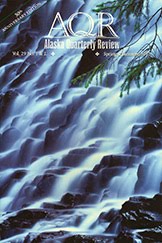
AQR Celebrates 30 with Photo Narratives

Alaska Quarterly Review celebrates 30 years of publishing with its Spring & Summer 2012 issue (v29 n1&2). Not to be missed in this issue is a stunning special feature: “Liberty and Justice (for all): A Global Photo Mosaic.” This special feature includes 68 photographers from 22 nations with both narratives and photo captions. Though some photos are black and white, the entire section is given full color, glossy paper with the photo receiving its own facing page to the text narrative. This is an impressive inclusion for any literary magazine to provide its readers, and the force of these images and text – running the gamut from hopeful to heart wrenching – is truly astonishing.

Grain Contest Winners

The Winter 2012 (v39 n2) issue of Grain features the winners of the 23rd Annual Short Grain Writing Contest.

Fiction – Judged by Zsuzsi Gartner
1st Prize – Pete Duval
2nd Prize – Zack Haslam
3rd Prize – Zoey Peterson

Poetry – Judged by Jeramy Dodds
1st Prize – Tim Bowling
2nd Prize – Phoebe Wang
3rd Prize – Vincent Colistro

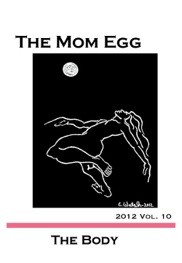
The Mom Egg Celebrates 10 Years

The Mom Egg is an annual print literary journal of poetry, fiction, creative prose and art by mothers about everything, and by everyone about mothers and motherhood. The Mom Egg was founded in 2003 by Joy Rose, as the official literary magazine of Mamapalooza, an annual festival for mother-artists. Alana Ruben Free, a poet and playwright, took the helm as editor, a post she held through 2008; Marjorie Tesser joined as an editor in 2006. The Mom Egg’s mission is to expand the conversation to include varied perspectives by and of mothers, and to increase opportunities for mothers, women and artists. Congratulations Mom Egg!

The Edge of Maybe

Here’s an idea for a story. Take a beautiful life: happy marriage, comfortable home, and a smart and talented daughter, the three of you eating in a different restaurant every night. Ignore the husband’s loner party binges in the basement. Push aside the wife’s curiosity of her yoga teacher’s guiding hands on her hips. Everyone’s entitled to a little secret, except daughters. Don’t even suspect that daughters, locked in their rooms, are not doing homework. Now throw in a surprise visitor from the past and witness the beautiful life unravel. Next explore the aftermath from three points of view: wife, husband, daughter. Why not? All three are watching each other, and nobody’s really talking. Continue reading “The Edge of Maybe”

The Poetry of Thought

Polymath George Steiner offers up an essay that will, in all likelihood, either send readers into the library stacks with a long list of sources for further reading or drive them away from finishing his text. There are instances here where on a single page, no less than ten names from a diverse range of languages and eras throughout Western thought are bandied about as if Steiner were relaying a conversation with a young child or a walk he takes to the park every day. It’s most likely to be found either hopelessly intimidating or a joke, depending on the temperament of the reader. Continue reading “The Poetry of Thought”

The Severed Head

I never forgot that photo. It was in a history of the Metropolitan Opera, and soprano Olive Fremstad was Salome holding the platter with John the Baptist’s head. Even by 1907 standards, her beaded costume and big hair were beyond camp, but to my teenaged self the waxy, dead head looked real enough. I was sufficiently creeped out to avoid Richard Strauss’ opera until adulthood, when I discovered Salome’s true horrors: placing unrealistic demands on its lead to perform a striptease to music that’s impossible to dance—let alone time the tearing off of seven veils—to, before singing a punishingly long monologue to the Baptist’s head prior to kissing it (gross . . . even if it should resemble Bryn Terfel, a recent Met Baptist). With the exception of Electra, Richard Strauss was never again so creatively daring. Continue reading “The Severed Head”