 Judge Gish Jen has selected Farah Ali’s “Heroes” as the 2016 Nelligan Prize for Short Fiction, which is published in the newest issue of Colorado Review (43.3 Fall/Winter 2016). A finalist in other contests, this is Ali’s first published story, and she has a collection of short fiction in the works.

NewPages Blog
At the NewPages Blog readers and writers can catch up with their favorite literary and alternative magazines, independent and university presses, creative writing programs, and writing and literary events. Find new books, new issue announcements, contest winners, and so much more!
Books :: December 2016 Award Publications
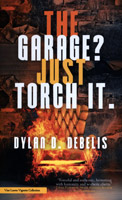 Dylan D. Debelis’s poetry and vignette collection The Garage? Just Torch It. was published earlier this week from Vine Leaves Press. A semi-finalist in the Vine Leaves Annual Vignette Collection Award (submissions currently open until February 28), this collection is, according to the Vine Leaves website, a “rally cry for the healing power of wonder and the disarming catharsis of grief.” Debelis “balances themes of belonging, love, politics, illness, family and forgiveness with stunning imagery and an intense playfulness.” Paperback and e-book copies are available at the publisher’s website.
Published by BkMk earlier in the month was Bonnie Bolling’s The Red Hijab. The poetry collection won the John Ciardi Prize for Poetry, selected by H.L. Hix in 2015, and is written from the perspective of an American poet living in the Middle East. In his foreword to the collection, Hix says it “does not pretend divine perspective, and does not purport to have an answer to the conflicts reported in the news. It does, though, adopt an alternative form of attention and offer an alternative kind of account.” This results in a “more complex portrait than the news presents.” Stop by the publisher’s website to learn more about The Red Hijab.
New from CNF :: True Story
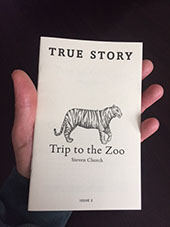 New from Creative Nonfiction is the monthly True Story, a pocket-sized (4.25×6.75) paperback featuring one long-from essay. Spotlighting one author per month, CNF aims to provide readers the widest possible variety of styles and content in their selections. Steven Kurutz’s Fruitland headlined Issue 1 (39pp; read excerpt here), and just out, Issue 2 delivers Steven Church’s Trip to the Zoo (25pp; read excerpt here). Available in one- and two-year subscriptions, this is a great holiday gift idea for the readers and writers on your list!
Terrain.org 2016 Contest Winners
 The 2016 Terrain.org contest winners and finalists have been awarded with comments from the judges on winning entries available here.
Fiction
Judged by Kate Bernhiemer
Winner: “Varya’s Black Suede Shoes” by Peter Justin Newall
Finalist: “Everest” by Scott Spires
Nonfiction
Judged by Lauret Savoy
Winner: “Geography of the Self” by Catherine Mauk
Finalists: “Life After Life” by DJ Lee and “The Fursuit of Happiness” by Meg Brown
Poetry
Judged by Eamon Grennan
Winner: “Boyhood Trapped Between Water and Blood”, a long poem by William Wright
Finalists: “Smoke and Miracles” by Kevin Miller, three poems by Cecily Parks, and three poems by Katie Prince
The next Terrain.org contest is open for submissions in January 2017. Winners receive $500, finalists $100.
Indiana Review Annual Poetry & Fiction Prize Winners
The Winter 2016 (38.2) issue of Indiana Review features the winners and runners up of their annual poetry and fiction contests:
Winner 2015 Fiction Prize
Judge Laura van den Berg
Simon Han, “Be Tanly”
Winner 2016 Poetry Prize
Judge Camille Rankine
Alicia Wright, “His Father’s Wake”
Finalists 2016 Poetry Prize
Anna Leigh Knowles, “The First Year We Lived Underground”
Talin Tahajian, “Hibernation”
Broadsided Call for Writing and Art NoDAPL
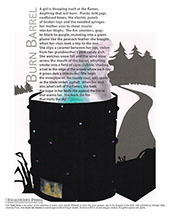 In addition to the December 2016 Broadsided Collaboration: Burn Barrel, art by Sarah Van Sanden, poem by Todd Davis, Broadsided Press is offering the community “a powerful collaboration of defiance and hope in the face of difficulty”: NoDAPL Responses Feature.
“We want your writing and art in response to the Action at Standing Rock,” write the editors. “In the past, we’ve provided art for you to spring from. This time, we want to open our submissions to visual artists as well as writers. Guest editor Tiffany Midge will help select final pieces. We waive submission fees for those directly involved in the resistance. Please help share the word.”
Broadsided Press was founded in 2005 and publishes an original literary/artistic collaboration each month for download with the mission, quite simply, “to put literature and art on the streets.”
2016 Profane Nonfiction Contest Winner
 The 2016 Profane Nonfiction Prize winner is “The End of the World” by Kat Moore. She will receive the $1,000 honorarium and publication in the Winter 2017 Issue 3.
Judge Dinty W. Moore [no relation] comments on the winning work: “‘The End of the World’ is a powerful, intricate, and compelling memoir essay. While other writers might have sensationalized the lurid aspects of heroin use and addiction, Kat Moore uses intimate detail and a matter-of-fact narrative to show just how quotidian the day-to-day life of a junkie can be. Superb writing and voice.”
Contest Finalists: “Full Count” by Devin Kelly; “This is a Test of the Emergency System” by Jill Kolongowski; “Newmom” by Molly Pascal; “Pruritus” by JD Schraffenberger.
Profane is a winter annual print and audio journal of poetry, creative non-fiction, and fiction. Every published poem and piece of prose is recorded in the author’s own voice.
Lit Mag Covers :: Picks of the Week
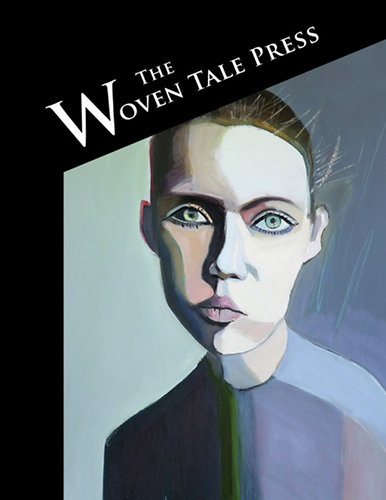 Issue #9 of the monthly online journal The Woven Tale Press features the steel scupture “Facing the Elements Blindfolded” by Ruud Schrijvershof, with addtional images of his works included inside the publication. The Woven Tale Press is a fine arts and literary magazine with the mission to grow Web traffic to noteworthy writers, photographers, and artists.
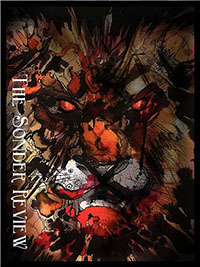 “Lion” by Cesar Valtierra draws readers in to Issue 6 of The Sounder Review, an online and print jounral of art, short fiction, and creative nonfiction. Based in Upstate New York, TSR “strives to question, redefine, and challenge conventional viewpoints; to usurp the definition of reality and truth.”
Motion Poems Season 7
 The seventh season of Motion Poems has begun. If you’re a ‘series’ watcher and love getting your installment fixes – then tag onto Motion Poems. This season’s installments are being produced in partnership with Cave Canem, “a home for the many voices of African American poetry.” Motion Poems combines works from great poets with outstanding contemporary filmmakers to create free films for everyone to enjoy. This season, Motion Poems will be releasing each new film monthly via Facebook and posting announcements of the release on Twitter and Instagram, so LIKE and FOLLOW Motion Poems to stay up-to-date with the series. You can also sign up for their quaterly newsletter which includes links to the films as well as other news and updates. The first film in the series is the stunning and leave-you-speechless “How Do You Raise a Black Child?” by poet Cortney Lamar Charleston and filmmaker Seyi Peter-Thomas.
American Life in Poetry :: Ron Koertge
American Life in Poetry: Column 609
BY TED KOOSER, U.S. POET LAUREATE
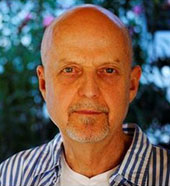
We’ve been selecting poems for this column for more than ten years and I can’t remember ever publishing a poem about a cat. But here at last is a cat, a lovely old cat. Ron Koertge lives in California, and his most recent book of poems is Vampire Planet: New & Selected Poems, from Red Hen Press.
Lily
 No one would take her when Ruth passed.
As the survivors assessed some antiques,
I kept hearing, “She’s old. Somebody
should put her down.”
I picked her up instead. Every night I tell her
about the fish who died for her, the ones
in the cheerful aluminum cans.
She lies on my chest to sleep, rising
and falling, rising and falling like a rowboat
fastened to a battered dock by a string.
We do not accept unsolicited submissions. American Life in Poetry is made possible by The Poetry Foundation (www.poetryfoundation.org), publisher of Poetry magazine. It is also supported by the Department of English at the University of Nebraska-Lincoln. Poem copyright ©2016 by Ron Koertge, “Lily,” from Vampire Planet: New & Selected Poems, (Red Hen Press, 2016). Poem reprinted by permission of Ron Koertge and the publisher.Introduction copyright ©2016 by The Poetry Foundation. The introduction’s author, Ted Kooser, served as United States Poet Laureate Consultant in Poetry to the Library of Congress from 2004-2006.
Flying Couch
The holiday season brings families together, for better or worse, leading many of us to face the makeup of our identities across the dining room table. Whether it’s seeing your own mannerisms in your parents, or it’s basking in grandparents’ old stories from before you were born, we can recognize the ways in which our families have shaped our identities. In her graphic memoir, Flying Couch, Amy Kurzweil explores her own identity as a granddaughter, a daughter, an artist, and a Jew.
The Dead Man
Obsession is a nasty beast whose claws sink deep and anchor inside its victims. Nora Gold’s book, The Dead Man, follows a heartbroken Eve Bercovitch, who has spent the last five years bleeding out in the grips of her obsession. The Dead Man straps readers into the passenger’s seat of a roller coaster ride through the world of Israeli music. Gold weaves a narrative so intricate that readers everywhere will find themselves questioning the reality of this world. Eve is the perfectly imperfect vehicle through the wild world that’s unearthed inside these pages.
My Immaculate Assassin
Imagine you’ve discovered a way to assassinate anyone you please, with guaranteed anonymity, and it’s as easy as a single click of a button. Maura Nelson makes this discovery in what seems to be an epiphany. This knowledge is too heavy a burden for Maura to carry alone, so she enlists the help of Jack Plymouth. Together the two of them must battle morality and sense in My Immaculate Assassin by David Huddle.
Airplane Reading
If you’ve ever flown anywhere, you’ll identify with many of the short essays in Airplane Reading, edited by Christopher Schaberg and Mark Yakich. Even if you’ve never flown, it’s still worth reading for sentences like this: “A flying problem is the opposite of a drinking problem: it starts when you lose interest in the free booze.” So writes Ian Bogost in his essay “Frequent Flight.” Bogost is indeed a frequent flyer at more than 200,000 miles in a year. His piece is joined by essays from fellow travelers, including several doctors who take to the sky.
The German Girl
Armando Lucas Correa’s novel The German Girl is a sad Holocaust story, one not heard before. Based on an historical tragedy, never acknowledged by the Cuban government, it nevertheless includes the names and pictures of many of the 937 passengers on the St. Louis ship, fleeing Nazi Germany, who were not allowed to disembark at Havana on May 27, 1939—nor allowed into Canada or the U.S. They had to return to Europe where England, France, Belgium and Holland each took some but by then Germany declared war and only the English refugees were safe. Before that, some passengers with precious cyanide capsules committed suicide, because so few were allowed into Cuba, where more discrimination followed them, forcing many other outsiders to make the perilous journey to Miami. This story made is individual, personal and emotional by the focus on the Rosenthal family fleeing Berlin.
My Life as an Animal
Written in a voice and style reminiscent of memoir, Laurie Stone’s collection of linked short stories My Life as an Animal traces the strengthening and breaking of friendships and family ties in twenty-six stories. The narrator of the stories dances through time—from adolescence to her current life at sixty—and place—New York, Arizona, California, and England. True to life, characters appear and reappear in unexpected ways, affecting others in the past and present.
My Radio Radio
Within our world, ripe with the over-thinking of experience, it’s rare to encounter a coming-of-age story quite as visceral or unselfconsciously honest as that found within Jessie van Eerden’s My Radio Radio. Perhaps it’s the subtly surrealist thread that weaves its way through the tale that disarms the reader, setting her up, even readying her, for the unpacking of whatever symbolic gifts of meaning might emerge from the text. Wings. Radio. A baby chick. The click whirr, hiss hmm of a dying man’s machine. Yet, in spite of all that is foreshadowed, in spite of every ounce of allegory, it is within the journey of twelve-year-old Omi Ruth that each of the answers reside, should one choose to listen.
The Dead in Daylight
Melody S. Gee’s new book of poems is a compelling catalog of inheritance and family history—of trying to make a home in a world divided between incarnation and separation, life and death, past and future. The book itself is divided into two sections: “Separate Blood” and “Bone.” So not surprisingly, the poems here deal with bodies and their relation to other bodies, particularly the mother-daughter relationship, but other heritages as well.
Take This Stallion
You and I are filthy but it is / our filth” — “The Flying Phalangers”
Popping with pop culture. Zinging with Net slang. Formless yet formed. Slick and rough. Dating-sites and Netflix and Martha Stewart and Kendrick Lamar and Kim Kardashian and TMZ and ENVY and funerals and coke and religion and love and names become algebra and no one knows where they stand except on the cusp of a new paradigm, a new aesthetic—Take This Stallion is a force of poetic nature.
The Loss of All Lost Things
Amina Gautier’s third collection of short stories The Loss of All Lost Things is an accomplished reflection of our terrible reality. Abducted children, rent-boys, old maids, drop-outs, mourning parents, aging-regret filled parents, widowers eating uncooked Thanksgiving turkey with canned stuffing, the ugliest faces of divorce riddle each page with regret and melancholia.
A Poet’s Dublin
When I was a teenager my grandmother gave me an Irish Writer’s poster. Shaw. Synge. Swift. Behan. Yeats. Joyce. Beckett and O’Brien. It hung on the back on my bedroom door, right between The Republic of Ireland’s national soccer squad photo and the iconic red swim-suited Farah Fawcett. I was too young and isolated to know just how chauvinistic and linked to politics, often violently, the world of Irish letters and publishing was at the time. I had a vague idea about the struggle for political freedom, but was blind to gender issues that seem all too blazing now.
The Old Philosopher
Vi Khi Nao, born in Long Khanh, Vietnam in 1979, came to the United States when she was seven years old. In her book, The Old Philosopher, she has given us poems in vigorous experimental language. Reading through the book the first time, there is a feeling of a balanced worldly eye, even as the pervasive indistinctness of mixed and matched images/metaphors leaves a sense of no orientation. By the third reading, the seemingly unmoored fragments begin to come into focus: the book feels like the interlacing of two cultures initiated by the wreckage of the Vietnam War.
Books :: November 2016 Award-Winning Books
 With November practically over, let’s take a timeout to look back at award-winning small press and university press books published in the past few months.
In September, Rules for Lying by Anne Corbitt was published by the Southeast Missouri State University Press. Winner of the Nilsen Prize for a First Novel, Rules for Lying follows characters through a police investigation that makes them question their memories, allegiances, and actions, all while hiding secrets of their own. Check out the publisher’s website for more information.
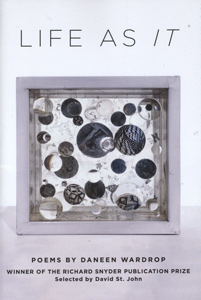
Earlier in November, The Ashland Poetry Press released Life As It by Daneen Wardrop. The collection was selected by David St. John as the winner of the 2015 Snyder Memorial Prize Contest. The collection of prose poems (Wardrop’s third collection) features themes of music, family life, spirituality, and more. Check out the publisher’s website for multiple ways to order copies.
Also out this November is The Expense of a View by Polly Buckingham, winner of the Katherine Anne Porter Prize in Short Fiction. The stories explore the psyches of characters, most displaced and disturbed, under extreme duress. Judge Chris Offutt called the collection “a carefully rendered examination of memory, loss, and sadness.” University of North Texas Press’s website has a preview of Buckingham’s collection and ways to order.
Check out these three award-winning books and show your support to small and university presses.
2017 Typewriter Calendar
 This has got to be the perfect gift for at least one person on your holiday list: a 2017 calendar featuring 12 vintage images typewriters and the women who wield them. The Writing Disorder online quarterly literary journal of fiction, poetry, nonfiction, art, interviews and reviews is offering this custom-made item, and right now at a 20% discount. Proceeds support the publication – a win-win all around!
Hudson Review Fiction Contest Winner Timothy Dumas
 Fiction Contest Winner “The Colonel’s Boy” by Timothy Dumas is highlighted in the autumn 2016 issue of The Hudson Review, and is available for readers full-text online here. This is his first published story.
Lit Mag Covers :: Picks of the Week
 “to pursue the unattainable” (2011; mixed media on paper; 22″ x 30″) from Carol Collicut’s Marcus Aurelius Series is featured on the autumn 2016 cover of The Fiddlehead: Atlantic Canada’s International Literary Journal and looks similar to a form of asemic writing.
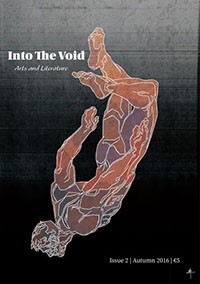 Published out of Dublin, Ireland, this second issue of Into the Void Arts and Literature features “In the Dream I’m Falling” by Zach Moroney on its cover.
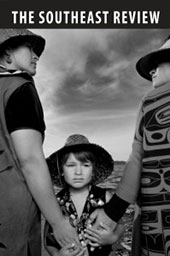 NewPages will always favor any lit mag cover that features the Detroit Tigers “D” on its cover. Though the black and white rendition of “An Ode to Farad #1” by Jamea Richmond-Edwards doesn’t quite do it justice, readers can find the full-color image inside The Southeast Review v.34 n.2, as well as and interview with the artist by Jessica Reidy.
2016 Far Horizons Award for Poetry Winner
 Yusuf Saadi is the winner of The Malahat Review 2016 Far Horizons Award for Poetry. Judge Steven Heighton selected “The Place Where Words Go to Die” from 519 poems entered in this year’s annual contest. Read Heighton’s comments about Saadi’s work here. Malahat poetry board member Samantha Ainsworth interviewed Saadi and explores questions like “Which comes first, the poet or the poem?” and “Do you have readers in mind when you write poetry?”
Lilly and Rosenberg 2016 Poetry Fellows
 November 2016 Poetry Magazine features works from the 2016 Ruth Lilly and Dorothy Sargent Rosenberg Poetry Fellows: Kaveh Akbar, Jos Charles, Angel Nafis, Alison C. Rollins, and Javier Zamora [as pictured]. The Poetry Magazine website includes the full content from the publication, in addition to recordings of several of the Fellows reading their works. The Poetry Foundation selects five poets between the ages of 21 and 31 years annually for the Ruth Lilly and Dorothy Sargent Rosenberg Poetry Fellows, each of whom receives $25,800 to support their further pursuits in writing. Read more about each of the Fellows here.
Lit Mag Covers :: Picks of the Week
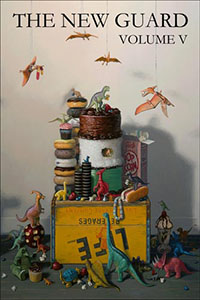 This whimsical “Dinosaur Feeding Frenzy” by Robert C. Jackson on the cover of Vol. V of The New Guard is an oil on linen, three panels sized 48″ x 36″ or 48″ x 108″. The issue itself is a contest winners frenzy, featuring winners, finalists and semifinalists of the The New Guard Vol. V Knightville Poetry Contest and the Machigonne Fiction Contest.
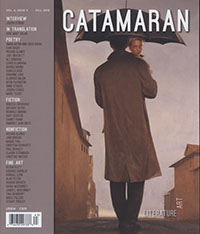 I couldn’t look away from this child’s searching expression on the fall 2016 cover of Catamaran. “Via Mal Contenti” by Bo Bartlett is an oil on linen (82 x 56; 2006) is as haunting as Founder and Editor in Chief Catherine Segurson’s closing words in her editor’s letter: “. . . please remember to vote this November, because we are responsible for the world our children will inherit.”
New Lit on the Block :: Sink Hollow
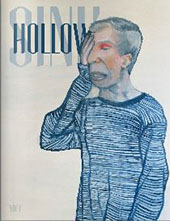 Sink Hollow is a landmark of Logan Canyon, at the mouth of which stands Utah State University and its iconic Old Main Building bell tower. In the canyon, Sink Hollow refers to a series of depressions that trap cold air, causing the hollows to be noticeably colder than the rest of the canyon. Visitors can expect to find frost on a July afternoon in the sinks.
WLT Women Writers Issue
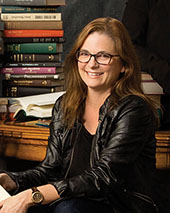 The November-December 2016 issue of World Literature Today is dedicated “cover to cover” to women writers.
Managing Editor Michelle Johnson [pictured] writes in the Editor’s Note: “. . . several months ago [the editors at WLT] decided to dedicate the November 2016 issue exclusively to women writers—and women reviewing women writers. The editorial team briefly considered creating such an issue without comment—as if WLT existed in a utopia of parity where all writers in a literary magazine might just happen to be women. But in 2016, giving women the whole issue is still noteworthy even for a magazine like WLT with a strong track record of publishing women writers.”
The collection opens with Alison Anderson’s “Of Gatekeepers and Bedtime Stories: The Ongoing Struggle to Make Women’s Voices Heard,” part of The Puterbaugh Essay Series. See a full list of contents here.
True Story – October 2016
If I’m being honest, what drew me in to the first issue of True Story, brought to you by the editors of Creative Nonfiction and In Fact Books, is that the inaugural story, “Fruitland” by Steven Kurutz, sounded intriguing, mysterious, and—well—like a fiction story I’d like to read. Two brothers, Donnie and Joe Emerson, recorded an album together in the late 70s. While a flop at the time, it was rediscovered by chance in 2008, catapulting them into belated fame and inevitably stirring up ghosts. As a true story, “Fruitland” ends up offering more to readers than a fictionalized “inspired by” story ever could.
Carve Magazine – Summer 2016
It’s been quite some time since I have been able to write a review for Carve—in fact the last issue I did review was Summer 2012, their final issue before moving to and including the new[ish] premium print edition—but I’ve been itching to do so for quite some time as I follow along with the places it is going. Although all stories are still available to read online for free, “because good honest fiction should never disappear into obscurity,” trust me when I say you’ll want to go ahead and purchase the premium edition.
Conduit – Summer 2016
Humanity has always been fascinated with death and invented stories to explore the possibility of life beyond death. Gilgamesh, distraught over Enkidu’s death in one of the world’s oldest bromance stories, dives into the underworld to unlock the secret to eternal life, but is outsmarted by a clever snake. Orpheus nearly resurrects his dead lover Eurydice after a private concert for Hades and Persephone, but fails because he can’t resist sneaking a peek over his shoulder at the last minute. Our fascination with death and resurrection continues to this day in popular culture, where superheroes are killed and brought back to life more times than that fellow from Nazareth. The summer 2016 issue of Conduit magazine, Digging Lazarus, presents a selection of talented writers who add their voices to the ongoing exploration of death and resurrection.
Hayden’s Ferry Review – Spring/Summer 2016
Chelsea Hickock, editor of Hayden’s Ferry Review dedicates this issue to ego. As Hickock explains, writers must be gutsy to believe that someone cares enough to “sit down with our words for hours at a time and live inside the worlds we create.” For all the ego these authors must have in their words, the heart of this issue is told through silences. It takes ego to believe what you write matters, but it takes greater ego to believe what you write will be heard in a pause and understood in a lack of words.
Continue reading “Hayden’s Ferry Review – Spring/Summer 2016”
Flash: The International Short-Short Story Magazine – April 2016
Like all good storytellers, the authors published in Flash: The International Short-Short Story Magazine invite the reader to come close and listen carefully. Only, these authors do so in 360 words or less. David Swann best captures the feeling of storytelling in his piece, “The Story of Her Eye” when he writes, “strangers are the best audience. But stories hate distance.” Flash bridges this distance. The journal is at its best through humor and sometimes fantastical pieces that pull you close.
Continue reading “Flash: The International Short-Short Story Magazine – April 2016”
Poetry Northwest – Summer/Fall 2016
Co-editor Aaron Barrell asks “And what force can a magazine of poetry have in this world?” and later promises that “each poem in these pages will offer sustenance.” I am inclined to agree. I would add to that the visual art on the pages of this issue of Poetry Northwest. Commanding and stunning, the images strike with a bold knowledge of beauty, joy, and heartbreak. Joe Wankelman’s photograph “Lines” arrests with cautious veracity. The works of photography and artwork in this issue are acute in their understanding of different realities.
Southern Poetry Review – 2016
If I were to give this issue of Southern Poetry Review a title, it might be “Profound Perspectives” or “Meaning in the Moment.” The poems in this issue find moments of awe in life events and transport them from the mundane through reflection to the place where art lives in all its weighty insightfulness and magic. The poets accomplish this with rich imagery, carefully controlled lines and stanzas, and an attention to the natural rhythm of language.
Poet Lore – Fall/Winter 2016
“Home is the place where, when you have to go there, they have to take you in.” Robert Frost knew all too well that home is not always the place where one has chosen to be but is the place where one is, if not welcomed, at least allowed in. The poems in this issue of Poet Lore were meant to be together and fall under an umbrella theme of home; they deal with relationships of people and places inspired by or in reaction to the word home and all of its connotations. They explore the many manifestations of home in memories and observations tinged with bitter nostalgia, unapologetic and raw.
2 Bridges Review – Spring 2016
In her extended interview with George Guida featured in this volume of 2 Bridges Review, poet Kim Addonizio references Macbeth’s speech about how life is a poor actor, strutting and fretting about the stage for his brief moment of fame before fading away to nothingness. With these words, Addonizio seems to have set the unifying theme of this volume; on its pages, beginning with the cover, readers find writers and artists exploring the ways in which people strut and fret.
The Antioch Review – Summer 2016
Let’s go back seventy-five years and meet ourselves again—because, as The Antioch Review has proven in its special anniversary edition, we did not hold the mirror closely enough back then, and we did not hear the message presented so clearly in the writings of people like Ralph Ellison, who laid before us in no uncertain terms our racial disparities and injustices, and in the poetry of that age. As Sidney Alexander explains in the poem “Prologue to Bolivar,” originally published in the autumn of 1944, we must “Roll back the dusty scroll, for no man lives / without his past: no man moves alone: / No man skates on time as if it were a film, but sees below him when the waters clear / the endless processionals of the dead.”
The Sewanee Review – Summer 2016
While reading the summer issue of The Sewanee Review, I decided to poke into some historical trivia. It was founded in 1892 and devoted to book reviews, theology, political science, literature and such. Poetry didn’t appear until 1920, and the Winter 1966 issue, at almost 1,000 pages, was devoted to T. S. Eliot.
Kestrel – Spring 2016
The Spring 2016 issue of Kestrel, a journal of literature and art out of Fairmont State University in West Virginia, includes a broad selection of poetry, an entertaining collection of short stories, and a fascinating group of art works. I know, that sounds like a pretty clichéd opening; the content, however, does not permit using novel exaggeration and false praise. It’s just good work that needs noting quickly and energetically. The work is definitely energetic.
The Louiseville Review Celebrates 40 Years
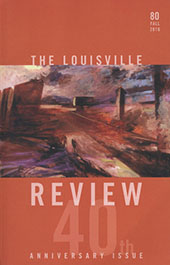 The Louisville Review celebrates 40 years of continuous publishing with its Fall 2016 issue. In her Editor’s Note, Sena Jeter Naslund writes, “When I first held the newborn literary magazine in my hands, with great joy and satisfaction in 1976, and placed it alone, upright and wobbly on my office shelf, I thought, Someday there will be a whole row of this journal. That vision has come true, thanks to the initial support of the University of Louisville, the diligence of Karen J. Mann and myself in fundraising and cost-cutting, and to the generous continuing support of both the magazine and our Fleur-de-Lis Press by Spalding University. I thank these institutions, and Karen, the writers who have contributed their work to these eighty issues, and the enthusiastic readers over the last forty years.” Thank you TLR and congratulations!
Lit Mag Covers :: Picks of the Week
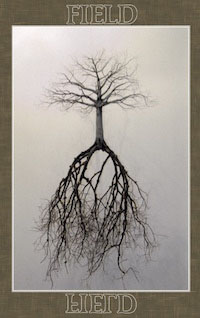 Jorge Mayet’s De Mis Vivos y Mis Muertos (2008, electrical wire, paper, acrylics, fabric) is featured on the cover of the poetry journal Field‘s fall 2016 issue. Inside, readers can find a symposium on the work of C.D. Wright, with essays by Jenny Goodman, Laura Kasischke, Pamela Alexander, Sharon Olds, Kazim Ali, and Stephen Burt.
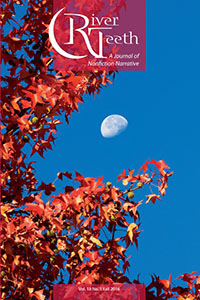 This fall 2016 cover of River Teeth: A Journal of Nonfiction Narrative features the photography of David FitzSimmons, “Sweet Gum and Moon, Ashland, Ohio.”
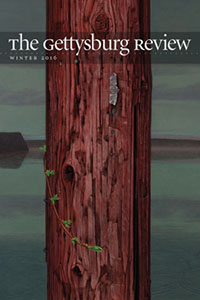 In keeping with what seems to be a ‘tree’ theme, this acrylic on panel by Eric Green, entitled “Pole,” is just sample of the kinds of stark yet lush images included in his full-color portfolio inside The Gettysburg Review, winter 2016.
Books :: 2016 WWPH Fiction Prize Winner
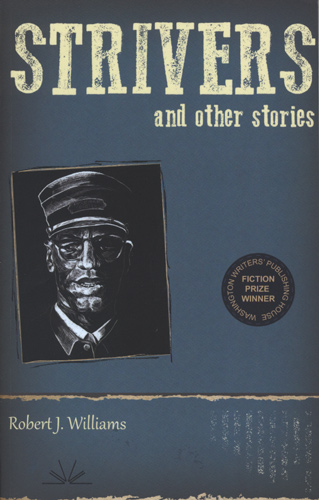 At the beginning of the month, Washington Writers’ Publishing House published the winner of the 2016 Fiction Prize: Strivers and Other Stories by Robert J. Williams.
From the publisher:
Set between the 1920s and the present day, Strivers and Other Stories explores a range of African-American and Southern voices reflecting characters striving towards their versions of the American dream. In 13 stories, we meet teachers and doctors, train porters and factory workers, soldiers and musicians; mothers, fathers, children and spouses; mentors and mentees. With a mix of humor and heart, satire and sentiment, this collection captures their everyday struggles for better lives and their hopes for promising futures.
Learn more at the publisher’s website.
Books :: Fall 2016 Book Award Winners
The fall season seems to be flying by, so let’s hit pause to look back at the award-winning books published in the past few months.
Back in September, Truman State University Press published Daughter, Daedalus by Alison D. Moncrief Bromage, winner of the 2016 T. S. Eliot Prize Winner. Jennifer Clement, contest judge, calls the collection “both original and very often masterful,” with an “elevated High Church intention [ . . . ] that T. S. Eliot would have recognized.” Copies are available digitally and in print at the press’s website.
Also published in September was the winner of Southeast Missouri State University Press’s Nilsen Prize for a First Novel: Rules for Lying by Anne Corbitt. Rules for Lying is a timely novel that explores the accusations and characters involved in an alleged rape, and how the families and the town they live in react, incriminate, and take sides. More information is available at the publisher’s website.
Moving on to October, Allegra Hyde’s Of This New World, winner of the John Simmons Short Fiction Award, was released. Judge Bennet Simms calls it “an ambitious and memorable debut.” In twelve stories, Hyde writes with a mix of lyricism humor, and masterful detail. Check out the University of Iowa Press website for more information.
And finally, Josh Rathkamp won the 2016 Georgetown Review Press Poetry Manuscript Contest with his collection A Storm to Close the Door. Terrance Hayes calls the collection stunning with poems that “are often quick-witted and charming, but they never shy away from their meditations and quotidian American blues.” SPD has A Storm to Close the Door available for purchase.
Books :: 2015 Noemi Press Poetry & Fiction Award Winners
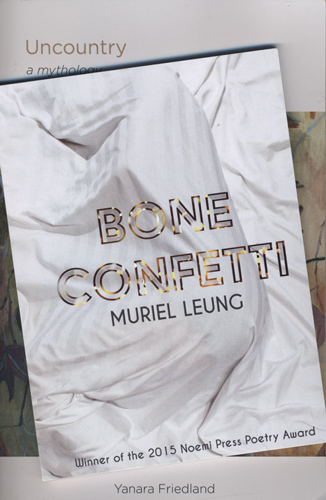 This past October, Noemi Press released the winner of the 2015 Noemi Press Poetry Award: Bone Confetti by Muriel Leung. Leung’s first poetry collection, Bone Confetti reveals “there are two types of survivors at the end of the world.” Ash confetti “floats between funeral and parade, wedding and hell. When all that is left is the terrible residue of memory, lovers and ghosts try their best to make do [ . . . ] in an attempt to fashion a new sense of humanity.” Check out the Noemi Press website for more information and copies.
Looking ahead to December, the 2015 Winner of the Noemi Press Fiction Award will be released. Uncountry: a mythology by Yanara Friedland. The novel is “a collection of narratives that aim to expand creative pathways into historical space, particularly histories of migration and displacement.” Divided into four sections, each section explores “The gaps bweteen ‘remembered’ official history and the more unreliable spaces of private memory and unspoken unofficial history.” Copies of Uncountry are available for pre-order at the Noemi Press website.
[Quotes from SPD website]
Books :: Pint-Size Publications First Book
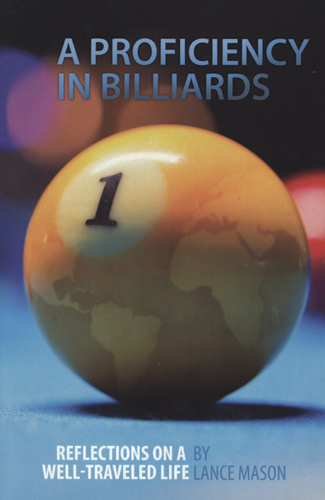 Pint-Size Publications, publisher of literary magazine Sport Literate, introduces their very first nonfiction, single-author book: A Proficiency in Billiards: Reflections from a Well-Traveled Life by Lance Mason. Mason first came to the editors’ attention with his essay “In the Lair of the Red Dragon,” published in an issue of Sport Literate earlier in the year.
A Proficiency in Billiards, Mason’s first essay collection, takes readers from his home base in South California where he stood “eyewitness to pool hustlers and drag racers in the 1960s” to travels throughout the world, including New Zealand, Ireland, Greece, and Yugoslavia, just to name a few. Readers are invited along Mason’s travels, all from the comfort of their homes.
Keep an eye on Pint-Size Publications to see what they’ll have on tap next, and head to their website to order copies of A Proficiency in Billiards.
Books :: The World According to Star Wars
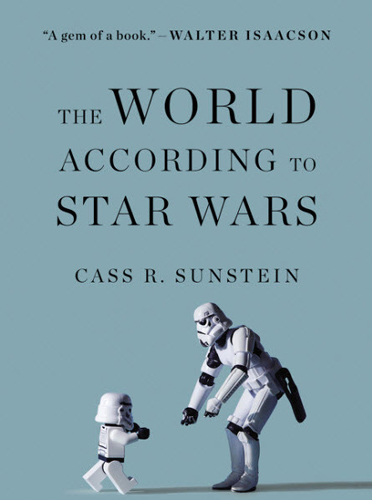 Author Cass R. Sunstein introduces his 2016 book, The World According to Star Wars (HarperCollins) humbly enough:
I’m going to be covering some diverse topics here, including the nature of human attachment, whether timing is everything, how to rank the seven Star Wars movies, why Martin Luther King Jr. was a conservative, how boys need their mothers, the workings of the creative imagination, the fall of Communism, the Arab Spring, changing understandings of human rights, whether The Force Awakens was a triumph or a disappointment, the limits of human attention, and whether Star Wars really is better than Star Trek.
With the exception of that last point, which I still find open to debate, one of the joys of this book is that Mr. Sunstein accomplishes the tasks he sets out in a quick reading, well-documented short book that combines playful romps of unabashed Star Wars fandom with high level reviews of politics, psychology, sociology, behavioral economics, and film critique. The book is engaging for nerfherders and Jedi Knights, alike.
[Guest post by Chris Curtis. Chris teaches psychology at Delta College: www.delta.edu/clcurtis.]