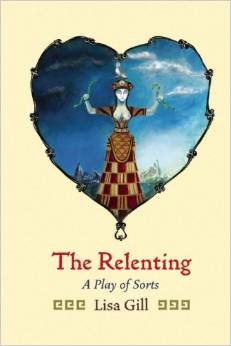
 Not every writer could make a face-down with a rattlesnake in her Moriarty living room “a primal encounter waiting to be interpreted,” yet that’s precisely what Albuquerque poet Lisa Gill has done. Her introduction to the play, “The Catalyst & the Evolution,” contains one of the best descriptions of the writing process I’ve read: “Ecdysis is the word for the skin sloughing snakes do and might as well be the word for the process writers go through with revisions of certain manuscripts, those texts whose life cycles demand we shed draft after draft, abandoning each accrued preconception to ultimately access deeper instinct.” Continue reading “The Relenting”

NewPages Blog :: Book Reviews
Check out book reviews of titles from independent publishers and university presses on the NewPages Blog.
Under the Small Lights
John Cotter, author of the just published novella Under the Small Lights, is also a poet. The novella, a co-winner of 2009 Miami University Press Novella Contest, and a knowing yet earnest coming-of-age story about a group of college-age youths embracing a guileless hedonism and salvation through art, has many marks of a poet: a deft feel for spoken language and the ability to create vivid scenes through language. The very structure of the book – with short, often very short, chapters – has less of the expansiveness of prose, and more the concise cognitive breath of poetry. Continue reading “Under the Small Lights”
Falling off the Bicycle Forever
The latest collection from Michael Rattee, Falling off the Bicycle Forever, is a smooth, two-wheel ride through your nearest suburban neighborhood; if you don’t pay close enough attention, you’ll miss the subtleties of this book’s sedentary life, the thick underlay of muck beneath the gilded exterior of the American Dream. Continue reading “Falling off the Bicycle Forever”
Destruction Myth
Mathias Svalina’s Destruction Myth is a collection of great intellectual rigor, grounded by an awareness of the everyday. It presents a series of forty-four poems, all but one entitled “Creation Myth.” Reaching back into history – and sometimes prehistory – Svalina’s poems explore origins. Indeed, almost every work but the last (“Destruction Myth”) starts with some variation of “In the beginning.” Relying upon this formula lifted from “Genesis,” Svalina nonetheless demonstrates great range. He presents highly personal material, confessing “how I felt / when I was eight years old / & my home broke apart,” alongside thought-provoking anthropological generalizations (“Human life begins / at the moment / of contraception”; “Nothing without thumbs / is human”). And he displays skill with both free verse and prose – though the latter mode seems better suited for his forthright tone and frequent use of dialogue. Continue reading “Destruction Myth”
I Have to Go Back to 1994 and Kill a Girl
When titles are well written, they strike our interest and pull us into the main text, but they also are part of the main text – adding to the story, the voice, the emotional resonance – and should never be something without which a text can survive or make sense. I Have to Go Back to 1994 and Kill a Girl – chosen by Lynn Emanuel for the 2008 Kathryn A. Morton Prize in Poetry – does just those things and is exactly what the title of a book should be; even before readers get to what’s inside of the book, it is striking, creative, intriguing, and relevant. Continue reading “I Have to Go Back to 1994 and Kill a Girl”
Requiem for the Orchard
What’s in an author’s name? Just uttering, “Oliver de la Paz” is to be moved by poetry. Repeating the musicality of such a name over and over before even peeling back the cover to the opening poem makes one ponder, “Could this poet’s name be some sort of predestination statement at the root of his creative process? Or evidence of his introduction since birth to the rise and fall of words that have fine-tuned his ear?” Continue reading “Requiem for the Orchard”
Creating a Life
In her memoir Creating a Life, Corbin Lewars chronicles her difficult journey to motherhood. Along the road there is a miscarriage, unearthed memories of being raped as a teenager, a struggle to find meaningful work, and tough decisions about the birth itself: hospital or home? Drugs or “natural” childbirth? Continue reading “Creating a Life”
The Disappeared
The novel The Disappeared, by Kim Echlin, is one that defines how love can surpass not only generations but countries as well. The story comes through so naturally – the narrator not hesitating to let true statements of the heart come through when need be – that, by the end of the novel, I felt as if this was a story told to me personally by a good friend. Continue reading “The Disappeared”
Impotent
If you’ve ever been on a mind-melting prescription drug binge, Matthew Roberson’s new novel Impotent might be nostalgic for you. But for the rest of us in docile society, this new work from Fiction Collective 2 lives up to the bizarre, psychedelic, experimental, and well-crafted reputation of the press’s many outer-rim publications. For example, Impotent opens with the recurring characters L and I, in which L stands for “Last Name, First Name, Middle Initial” and I stands for “Insured.” No character throughout the entire work has a clear name, mirroring the dehumanization that comes with the prescription drug industry. Continue reading “Impotent”
LA Liminal
According to Merriam-Webster, liminal describes a threshold, an in-between state; it is defined as “of, relating to, or being an intermediate state, phase, or condition,” and it is the perfect adjective to describe the state of Becca Klaver’s poems in LA Liminal, her first full-length collection. Prose pieces woven throughout the book present a common narrative: a young lady from a Midwestern town moves to Los Angeles in hope to discover whatever it is that LA promises, grows disenchanted, and leaves. However, this tale is anything but common thanks to Klaver’s spin on the whole experience. Continue reading “LA Liminal”
Wings Without Birds
Wings Without Birds, the most recent collection from poet and translator, Brian Henry, is a book that quietly and confidently upends various conventions and expectations. The title itself is a good map for what follows: the mind at flight, tethered but not subservient to the earthly body. Although the speaker in “Where We Stand Now,” the book’s long center poem, claims: Continue reading “Wings Without Birds”
Isobel & Emile
Isobel & Emile is the story of two young lovers who separate and then try to survive on their own. The novel opens on the morning after their final consummation. Emile boards a train bound for his home in the city. Isobel stays in the town where they conducted their brief affair. For each one, the pain of separation becomes an existential crisis. Continue reading “Isobel & Emile”
Look Back, Look Ahead
This selected edition of Srečko Kosovel’s poems, translated from the Slovene by Ana Jelnikar and Barbara Siegel Carlson, is a welcome addition to the developing canon of Slovenian poetry, but more so, it’s an obvious labor of love by both translators as well as publisher. The book is perfect-bound in a simple but eye-catching jacket from Ugly Duckling, with interior text provided in the poet’s native language as well as English on facing pages. Additionally, there are poems reprinted in Kosovel’s own handwriting, in part to offer a graphological glimpse into the author’s character, but also to promote documenting him as a pioneering yet playful manipulator of language. Continue reading “Look Back, Look Ahead”
Talk Thai
It seems inherent that immigration stories must revolve around flight from a home country – due to war, political injustice, threat of death, wretched conditions that force a person to seek a better life, or the desire to achieve the American Dream. There is none of this in Talk Thai. Sukrungruang’s parents left Thailand enticed by jobs. He writes, “Most Thai immigrants viewed America only as a workplace. America provided jobs. America provided monetary success. America provided opportunities Thailand couldn’t.” No harrowing tales of escape or of the horrors left behind. Not even a real desire to be here: “My mother often joked that she started packing for home as soon as she arrived in Chicago in 1968.” This kind of immigrant story, then, must settle around some sense of “the other” – the outsider – and the day-to-day struggles of not fully belonging. And in America, this is easy. Continue reading “Talk Thai”
Immigrant
The cover of Immigrant reveals the high heels and provocative bare legs of a woman peeling and eating oranges, and indeed the book depicts sexual relationships, but there are also fruits, domestic and exotic, countries of partisans, barbed wire fencing in Texas, layered speech, a clear-eyed love of the world, and dreams, too, of what’s missing. These poems, with exact, evocative lines and phrases, summon, re-awaken, evoke, as in the Latin vocare, to call, call forth. Then they shape, skillfully, the call, the voice, the song, the busses that “splash the same / sloppy syllable across each sidewalk” or “the hieroglyphs that suckle”; they move “like a tongue / through the mouths of the speechless.” Continue reading “Immigrant”
Flowers
I’m a sucker for well-played formalism. Mongrel poetry; pedigreed from sestinas and villanelles, but – some earlier generation having snuck out the back with a scraggly beat poet – nearly unrecognizable, with crooked teeth and fantastic, durable hips. Continue reading “Flowers”
The Ancient Book of Hip
In the introduction to The Ancient Book of Hip, D.W. Lichtenberg states his purpose: “This book is a documentation, a case study, an oral history, or whatever you want to call it.” It attempts to document “the phenomenon of hip,” the twenty-something trust-funders who moved to urban areas, specifically Williamsburg, Brooklyn, at the turn of the twenty-first century. What follows are poems that capture the New York School sprezzetura of Frank O’Hara. Continue reading “The Ancient Book of Hip”
Selenography
In his fifth book, Joshua Marie Wilkinson (in collaboration with photographer Tim Rutili) presents to us Polaroid photographs and poetry in gorgeous interplay. The text, broken into five poems/sections with words on the verso and images on the recto, is a fairly quick, very enjoyable read on the surface, but beyond the surface it achieves a brilliant complexity that haunts readers long after they put down the book. Continue reading “Selenography”
Ghost Machine
In Ben Mirov’s debut poetry collection Ghost Machine, the overriding tension is the kinetic, non-reflective “I” (or sometimes “Eye”) stabbing through a list of seemingly random present-tense actions with an ADD-like attention span, overlaid with the sense of a haunting presence (or presences), creating the space of a temporal past. The randomness with which actions and thoughts take place suggests a lack of agency, but as the momentum builds it seems more that that barely-there presence is stirring – if not driving – the action. Continue reading “Ghost Machine”
The Dream Detective
If you wake up in the morning and fragments of phrases, words, and images coalesce into a beautiful potluck of fascinating, hilarious, and magical linguistic gymnastics that have serious questions and answers about life at their core, then you must be reading The Dream Detective by David Mills. In his first collection, language is a platform for profundity and profundity is a platform for language and its reshaping or remolding that both regales us with its fantastic puns, double-entendres and sexual humor as much as it tackles serious subject matter such as the Sean Bell incident epitomized by the poem “Forever’s Bread.” If you are greedy for adventure through language, its mending, its bending and its manipulation for the greater good, then you’ve come to the right place. Continue reading “The Dream Detective”
The Running Waves
The Running Waves is a book about two brothers learning to come to terms with hard times in each of their lives. The younger of the two brothers, Colin, is a 19-year-old shoe store employee trying, unsuccessfully at first, to get past the accident that killed his two best friends the previous year. Dermot is the 23-year-old elder brother, home from college for the summer. He comes home to hide for awhile from the fact that his girlfriend, someone he thought might be “the one,” broke up with him. The pair lives in Silver Shores Cape Cod, a popular destination for tourists on their way to Martha’s Vineyard. Dermot can see that Colin is not doing well and wants to help his brother but must first figure himself out. Continue reading “The Running Waves”
Orange Crush
I too am a fan of certain horror films, an admission that seems appropriate in the context of this review not only because the same sentiment is expressed in Simone Muench’s Author’s Note, but also because her third collection, Orange Crush, has much of the same pleasures as the best horror films – images and lines that shine sharp and precise as moonlight on knives, a simultaneous yearning for and horror at the body and its desires, a voluptuous darkness, and – almost everywhere – lost girls. Continue reading “Orange Crush”
Not Blessed
The best writers tell the same story over and over again. In his new book, Harold Abramowitz takes this idea to an extreme. Not Blessed consists of 28 chapters, each between two and three pages in length. Each chapter in this slim volume tells the same story: A boy wanders from his grandmother’s house, gets lost in the woods, and is rescued by a policeman. Continue reading “Not Blessed”
Gurlesque
The highly-anticipated poetry anthology, Gurlesque: The New Grrly, Grotesque, Burlesque Poetics has aroused a vigorous discussion since its release. Most of the discussion has surrounded the concept, definition, and limitations of “Gurlesque,” a term coined by co-editor Arielle Greenberg in 2002 to map certain tendencies of a number of female American poets born between the late sixties and the early eighties writing in this last decade. Continue reading “Gurlesque”
Divination Machine
The self-described mission of Free Verse Editions (in new partnership with Parlor Press) is to publish free verse that “[uses] language to dramatize a singular vision of experience, a mastery of craft, a deep knowledge of poetic tradition, and a willingness to take risks.” Divination Machine, a new release from the Free Verse book series presents to us the very archetype of that poetic mission and aesthetic. Continue reading “Divination Machine”
I Was the Jukebox
I Was the Jukebox, selected by Joy Harjo for the 2009 Barnard Women Poets Prize, is Sandra Beasley’s witty and furious second collection (her first, Theories of Falling, won the 2007 New Issues Poetry Prize). Continue reading “I Was the Jukebox”
Hook & Jill
Welcome back to Neverland. For those who loved the stories of the boy who wouldn’t grow up, Andrea Jones’s novel Hook & Jill will absolutely delight. All of Sir James Barrie’s characters appear, from Peter Pan and Tinkerbell to Mr. Smee and the ticking Croc. There are hideouts, Indians, bedtime stories, flying, and battles. And a good bit of passion, too. Continue reading “Hook & Jill”
Currency
This farang enjoyed Currency. Continue reading “Currency”
Seldom Seen
Blue Highways changed my life. I read William Least Heat-Moon’s account of his journey along the back roads of the United States when I was twenty, and I’ve been looking to repeat that literary thrill ever since. Enter Patrick Dobson, whose Great Plains quest, Seldom Seen, seems to plumb the philosophy of George Clooney’s Up in the Air character, Ryan Bingham. “Imagine for a second you’re carrying a backpack. I want you to pack it with all the stuff that you have in your life. […] Feel the weight of that bag,” says Bingham. “Make no mistake. Moving is living.” Continue reading “Seldom Seen”
The Vera Wright Trilogy
The Vera Wright Trilogy brings together Elizabeth Jolley’s three semi-autobiographical novellas; My Father’s Moon, Cabin Fever, and The Georges’ Wife. Set in England during the Second World War and it’s aftermath, the trilogy follows Vera on her journey from an adolescent nurse in a wartime hospital to a comfortably settled wife and mother in postwar Australia with a medical practice of her own. Throughout the novellas, much space is given to the host of intimate relationships that Vera has with both men and women. These relationships bring countless emotional and material complications to Vera’s life – along with two children, a stint in a tuberculous sanctuary and a trip halfway around the world. Continue reading “The Vera Wright Trilogy”
The Mechanics of Falling
In the title story of Catherine Brady's new collection of short stories, the main character wakes up naked in a bathtub, hung over, and finds his guitar in the toilet. After he makes his way downstairs to ask his female roommate (their complicated relationship soon emerges) what happened, she says, "You got your hands on a bottle of tequila." After some teasing, their exchange continues: Continue reading “The Mechanics of Falling”
Drake’s Bay
Drake’s Bay is an old school mystery novel, the type of mystery that relies on intelligent plot twists and well-paced revelations to draw the reader along, rather than relentless violence and gore. There is a murder, but Roberts discreetly avoids graphic descriptions of the killing or the body, other than to say that it was a “brutal” murder. Continue reading “Drake’s Bay”
Tough Skin
Sarah Eaton’s Tough Skin is a fun, scary book of prose-y poetry. Most people would probably agree that “scary” is an unusual quality to find in poetry. I can explain, I promise. While a lack of attachment to extended narrative prohibits the contemporary poem from creating the aspects of story necessary to truly feel fear – empathize-able characters, anticipation/suspense, etc. – Eaton’s poems make gestures toward horror in narrative microbursts. Think of the campy, shrewdly written episodes of Alfred Hitchcock Presents, which don’t give the viewer time to truly care whether the main character is murdered, but give pleasure of fright in their 30-minute mime shows of horror-film dialogue, melodrama and plot twists. Continue reading “Tough Skin”
Many and Many A Year Ago
Selcuk Altun’s novel is a page-turning adventure story, and miraculously one filled with mystery, despite the fact that every detail of the story is spoon fed to the reader via monologues. A self-proclaimed narrative of “a wild goose chase,” Many and Many A Year Ago follows retired Turkish Air Force pilot Kemal Kuray through various cross continental detective expeditions. While Kemal often feels as if a joke is being played on him through these sometimes fruitless voyages, the reader discovers early on the not-so-subtle meaning behind these quests. Through musical symbolism, Altun writes about the beautiful tragedy of endless love. Continue reading “Many and Many A Year Ago”
Full Moon on K Street
If anthology means a “gathering of flowers,” then Full Moon on K Street: Poems about Washington, DC is a resplendent bouquet accompanying editor Kim Roberts’s “love letter” to the City. 101 contemporary poems by current and former Washington residents honor the literary diversity of a city rich with history: “all these centuries we drag into the next century and the next,” writes Sarah Browning in “The Fifth Fact.” Continue reading “Full Moon on K Street”
Girl on a Bridge
If I selected reading material by title and title alone, I admit I probably wouldn’t have chosen to read Girl on a Bridge by Suzanne Frischkorn. The phrase “girl on a bridge” carries a lot of overdramatic weight with it, baggage my friends and I would like to leave with our overdramatic high school selves – or at least, left with blocked-up Hollywood writers in need of a setting for their coming-of-age climax. Continue reading “Girl on a Bridge”
Family Parables
Boris Pintar’s Family Parables is not light reading. Don’t take it with you to the beach or on the airplane. The stories, most of them dark and sinister, need your full, undivided attention. And even then, you may find yourself asking: what just happened? Continue reading “Family Parables”
Dilemmas of Deokie
Carol Sammy’s debut novel, Dilemmas of Deokie, captures the spirit and culture of Trinidad through the story of the young woman, Deokie. Though Deokie is too old for this novel to properly be termed a coming-of-age story, it is certainly the tale of a coming-of-self. Gradually, over the course of the novel’s anecdotes and scenes, the character and quandary of Deokie emerges: a young woman who loves her country and wants to make it better, yet feels helpless to do so. Continue reading “Dilemmas of Deokie”
My Heart Flooded With Water
I recently found myself submerged in unexplored waters discovering the selected and celebrated works of the late Argentine poet, Alfonsina Storni. My Heart Flooded With Water is a captivating collection of translations from Spanish to English by Orlando Ricardo Menes. In fact, Menes practically makes his own artistry appear as effortless as floating. I especially enjoyed the companion reading format, i.e. Spanish text of each poem on the left and the translated English version on the right. Continue reading “My Heart Flooded With Water”
Moth Moon
The first poem in Matt Jasper’s Moth Moon is one of the best poems I’ve read recently. It is called “Flight” and it describes two people watching a group of black birds fly towards the moon. There is a shift in the last two lines with the fear that “all of the light in the world will be blotted out forever.” This poem is four lines long and complete and moving. I even enjoyed the next few poems in the book as well; however, I detected an unsettling trend in the second half of the book. Continue reading “Moth Moon”
Toad’s Museum of Freaks and Wonders
An albino woman, a dwarf named Toad, and two Italian prisoners of war on a rabbit-ridden farm in the nether reaches of Australia: what could be a better premise for a novel? Setting such a bizarre and unique concept at the center of a piece of fiction is a bold strategy, but Goldie Goldbloom’s debut novel, Toad’s Museum of Freaks and Wonders, never falls short of the mark. The winner of the 2008 AWP Award for the novel, it is apparent from the first few pages that you are in the hands of a master; Goldbloom writes with clarity and complexity, balancing abstract questions of identity, love, and value with a tensely developed plot and rich characters. Continue reading “Toad’s Museum of Freaks and Wonders”
Bobcat Country
The poems in Bobcat Country sling readers into a humorous yet serious exposition of American culture that mocks relationships between American capitalism and pop culture, the American family, and the “business” of contemporary poetry. Continue reading “Bobcat Country”
Mattaponi Queen
In one of the many aching, tender scenes in Mattaponi Queen, a woman goes to Wal-Mart with her husband, who is dressed in drag. He’s about to have a sex change operation and the public shopping expedition is her way to support and process his decision. Later, she wonders: “How old do you have to be to understand how love works?” Continue reading “Mattaponi Queen”
Further Adventures in the Restless Universe
Dawn Raffel's newest collection of short stories, Further Adventures in the Restless Universe, is an intriguing look at relationships. The spare, unfussy prose explores familial boundaries, the complicated connections between mothers and their children, sisters, aunts and great aunts, husbands and wives. The mundane matters of every day existence – taking a child to a museum or carving a pumpkin, a phone call to catch up, a day spent at the beach, learning to drive – fill up Raffel's prose; each story occupies only a few pages (in some cases only one), but each moment captured by her prose completely fills up the whole space. Continue reading “Further Adventures in the Restless Universe”
The White Visitation
I was reading The White Visitation in the Detroit International Airport, waiting for my flight to Charleston, when the Iraqi gentleman on my left nudged my arm. “Is that the bible?” he asked. Continue reading “The White Visitation”
Quotidiana
The gift that Patrick Madden gives us in Quotidiana is the gift great essayists have given us for centuries and that is the elegance of a mind at work. The essays Madden offers in this new collection are essays in the most traditional, classical sense. They do not traffic in the far-fetched or the bizarre, competing with reality television to hold our attention with a cacophony of sound, nor do they rely on the story to bear the weight of their subject, rather they investigate the way ordinary experience confounds and delights us, once we stop and pay attention. Continue reading “Quotidiana”
Bharat jiva
kari edwards’s last book, Bharat jiva, was published posthumously. The book represents a leap in style, control and application of language, and scope of address and content over hir earlier works, disobedience, iduna, and a day in the life of p. For example, whereas obedience continually lists and refines those lists, working from inclusion and exhaustion, Bharat jiva has a huge scope, a generous posing of questions against lists. Continue reading “Bharat jiva”
0º,0º
Scientific metaphors are invisible pitfalls for most poets, mainly because the average writer is unable to grasp how wildly ridiculous his or her musings and conjectures are. Reciprocally, poetry put forth by physicists, if sincere, can leave one rather cold. Fortunately, Amit Majmudar easily sidesteps both problems in this wonderful collection by having both a real scientific background and genuine empathy, creating a coherent work with sustained intellectual and emotional focus. Continue reading “0º,0º”
Lost Alphabet
Lisa Olstein's Lost Alphabet is a serious meditation. All 90 pages of poetry have the same short paragraph form with a bracketed title that informs and sometimes subverts the poems. The setting seems post-apocalyptic in a quiet sort of way. There are no Mad Max renegades, but there is an unnamed narrator who moves to the edge of some pre-industrial village of horse traders where people dance to music made with a “dull spoon on the side of a pig.” The narrator is obsessed with the study of moths. The goal of this study is at first unclear, but as the narrator focuses more on the project, more questions arise. Continue reading “Lost Alphabet”
Sing, Mongrel
Sing, Mongrel, Claire Hero’s first full-length collection, proposes a central conceit where the born and the made merge to make a disturbing and lovely hybrid music. Continue reading “Sing, Mongrel”